Pages

Showing posts with label Dalai Lama. Show all posts

Thursday, May 28, 2026

Tibet, Spiritual Literacy, and the CCP’s Fundamental Misreading


Tibet, Spiritual Literacy, and the CCP’s Fundamental Misreading

It is my information that the Dalai Lama does not seek an independent Tibet. He does not seek a country called Tibet.

Much of the global conversation on Tibet is framed as a geopolitical dispute, a border issue, or a separatist movement. But that framing misses the central point. The deeper conflict is not primarily territorial. It is philosophical, spiritual, and civilizational.

What does history say? History is all over the place. Tibet has been India-facing for 10,000 years. Tibet has been an independent country for much of that time. But it has also been under central Chinese rule on and off. If you look at just the past few hundred years, it is half and half. Half the time it was its own country, half the time it was under Chinese rule. But if you go far back in time, Tibet was its own country.

History, however, is rarely neat. Political borders shift constantly across centuries. Entire empires rise and collapse. The modern nation-state is a recent invention compared to the long arc of human civilization.

But then, when the British showed up, they did not find one unified country called India. When they left, there were still over 500 princely states. So history is not the best guide.

The border is a modern concept. Only a few centuries ago, there was the concept of the frontier. The last Indian-inhabited village was India. And then there was the frontier. Nobody was there, so it made no sense to claim that for any country. And then when you reached a Tibetan village, now you were in Tibet. Neat geometric lines mapped by satellites is a new concept.

Modern governments often project today’s rigid understanding of borders backward into history. But ancient civilizations did not always think in those terms. Cultural spheres, trade routes, spiritual centers, and shifting frontiers mattered more than precisely surveyed lines on a map.

I don't think the debate is if the Dalai Lama wants a separate country or not. He does not. The debate is about the physical/material and the spiritual. And there the CCP is flat out wrong. Ignorant is a better word.

To say the only reality is the physical, the material, there is no spiritual reality is illiterate. That is like an illiterate farmer claiming the books are just paper. No, they contain knowledge. They are not just paper.

This is where the real disagreement lies. The Chinese Communist Party approaches Tibet largely through the lenses of territorial sovereignty, political control, economic development, and state power. Tibetan Buddhism approaches reality differently. It recognizes an inner dimension of consciousness, continuity, and spiritual practice that cannot be reduced to material categories alone.

Buddhism is sophisticated spiritual knowledge. The CCP wanting to have a say in the Dalai Lama's incarnation issue is like that illiterate farmer insisting he would like to debate the quantum physics that is in the book and further insisting he is right. You don't even know the information, how can you be part of the debate?

The Dalai Lama is a soul. He departs an old body, and then enters a new body. As to which new body is spiritual science. The Tibetan Buddhists know that science. The CCP does not even recognize that science. Xi Jinping might as well insist he would like to fly a plane. He does not know how to fly. It would be wrong to insist.

For Tibetan Buddhists, reincarnation is not folklore or political symbolism. It is part of a sophisticated spiritual framework developed over centuries through meditation, scholarship, monastic discipline, and lived religious tradition. Whether outsiders personally agree with that worldview is beside the point. The point is that the system has its own internal coherence and authority.

This is not a border dispute. This is not "splittism." This is the CCP being spiritually illiterate, and the Tibetan Buddhists holding some of the most sophisticated bodies of spiritual knowledge in the world.

There is a line in the Bible: “Be still and know that I am God.” Buddhism teaches how to be still.

Many religious traditions arrive at similar insights through different language. The contemplative traditions of Buddhism emphasize discipline of the mind, stillness, compassion, and awareness. These traditions are not primitive superstitions. They are intellectual and spiritual systems refined across centuries.

It gets really weird when the CCP tries to understand Israel purely in physical and material terms. You can't. It is impossible to understand Israel if you ignore the spirituality. But the CCP insists on doing it. That is asinine.

The same principle applies globally. Civilizations are not driven only by economics, military power, or political structures. Spiritual identity matters. Historical memory matters. Sacred geography matters. Entire peoples organize their lives around moral and metaphysical beliefs that cannot simply be dismissed as irrational leftovers from the past.

The solution is not for the Dalai Lama to stop insisting he wants a separate country. He does not. He has not. The solution is for the CCP to own up to its own spiritual illiteracy.

You could choose to stay that way, but it makes no sense to insist you would like the Tibetans to join ranks with you in your illiteracy. How do you do that? An illiterate person can become literate. But how does a literate person become illiterate? Makes no sense.

The CCP misreads the Communist Manifesto. It is possible Karl Marx did not believe in God. But that information is not contained in the Manifesto. In the Manifesto Marx criticizes the corruption in religion. But he is no match to Jesus in the Gospels. Marx does not go as far as Jesus. But no one argues Jesus was an atheist.

Marx’s criticism was often directed at institutions of power and hypocrisy, not necessarily at every dimension of spiritual inquiry. Throughout history, many religious institutions have indeed been corrupt. Criticizing corruption inside religion is not the same thing as denying the existence of spirituality itself.

Xi Jinping came to power criticizing the corruption in the CCP. Does that mean he is not a communist? No. That means he is anti-corruption.

The solution is for the CCP to pick up the postponed business of political reforms. Deng always wanted to do it. But he wanted to do economic reforms first. Political reforms would require becoming spiritually literate.

A society can become economically powerful and still remain philosophically incomplete. Material prosperity alone does not answer questions of meaning, morality, identity, or consciousness. Those questions do not disappear simply because a government declares them irrelevant.

Trying to end Buddhist culture and religion is a more stupid idea than wanting to drain Lake Baikal. Why would you want to do that? It contains a lot of fresh water. Fresh water is good to have.

Likewise, ancient spiritual traditions are reservoirs of civilizational wisdom. Destroying them impoverishes humanity, not just the people who practice them.

China keeps accusing the Dalai Lama of something he is not guilty of because the CCP cannot make head or tail of his deep spirituality.

The Tibetan issue will not be solved through force, propaganda, or administrative decrees. It will only be solved when the Chinese state develops the intellectual humility to recognize that there are dimensions of human existence beyond material control. Until then, the CCP will continue misunderstanding Tibet because it fundamentally misunderstands the spiritual foundation on which Tibetan civilization rests.


Sunday, August 24, 2025

The Dharamshala Accord: Putin And Zelensky


๐ŸŽฌ The Dharamshala Accord

A Netflix Limited Series

Tagline:
“Sometimes peace is just one deep breath away.”


Episode 1 — Goats, Guards & Geopolitics

Trailer Voiceover:
“In a Himalayan town where monks outnumber soldiers… two presidents arrive with more baggage than a Delhi wedding.”

Visuals:

  • Putin scowling at a goat blocking his motorcade.

  • Zelensky joking with monks while holding prayer flags.

  • Dalai Lama in slow motion: “Peace begins… with chai.”

Episode tagline: “Welcome to Dharamshala. Please leave your missiles at the door.”


Episode 2 — The Breathing War

Trailer Voiceover:
“When nuclear powers can’t find common ground… one monk offers a yoga mat.”

Visuals:

  • Putin struggling to sit cross-legged, falling over.

  • Zelensky making exaggerated “Hooooosh” breathing noises.

  • Dalai Lama correcting their posture like a strict yoga teacher.

Episode tagline: “Before you conquer nations, conquer your emotions.”


Episode 3 — The Peace Plan Scrolls

Trailer Voiceover:
“A roadmap older than politics, simpler than Twitter threads…”

Visuals:

  • Dalai Lama dramatically unrolling a scroll of your peace plan.

  • Close-up of Putin frowning, then nodding.

  • Zelensky whispering: “This… actually makes sense.”

Episode tagline: “Treaties are temporary. Inner peace is permanent.”


Episode 4 — Om My God

Trailer Voiceover:
“In the Himalayas… laughter is the deadliest weapon.”

Visuals:

  • Putin and Zelensky chanting “Om” with college students.

  • Putin reluctantly trying a cucumber face mask.

  • Zelensky photobombing monks with a selfie stick.

Episode tagline: “The first ceasefire was a punchline.”


Episode 5 — The Dharamshala Accord

Trailer Voiceover:
“This fall… the world discovers the power of deep breathing.”

Visuals:

  • Putin and Zelensky signing a peace document as the Dalai Lama rings a bell.

  • Prayer flags fluttering dramatically in the wind.

  • Final freeze-frame: Putin, Zelensky, and the Dalai Lama in a group hug.

Episode tagline: “The war ended… not with a bang, but with an Om.”


๐ŸŽฌ Episode 1: Goats, Guards & Geopolitics

Opening Scene: “The Arrival”

The camera pans across Dharamshala, prayer flags fluttering against the Himalayas. The town is tranquil—until a 25-car Russian convoy rumbles up the narrow mountain roads. Locals sip butter tea, unimpressed.
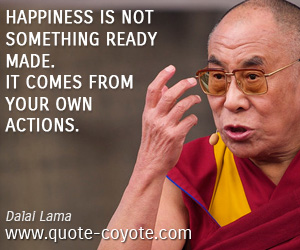
Putin steps out of his armored limousine, scowling at the thin air.
His aide whispers: “Sir, oxygen levels are low here.”
Putin replies: “Then bring me more oxygen. Annex it.”

Just then, a goat wanders into the middle of the convoy, chewing grass. Security scrambles, but the goat stares Putin down like it’s defending democracy.

Cut to: Zelensky, arriving in hiking boots, no motorcade—just laughing with a group of monks.
Zelensky (to monks): “At home, they call me a comedian. Here, I’m just the opening act for the Dalai Lama.”


Scene 2: “The Welcoming”

Inside the monastery courtyard, the Dalai Lama waits in serene silence. When both leaders approach, he bows slightly and says:

“Welcome, gentlemen. Please remove your shoes… and your egos.”

Putin grumbles but complies. Zelensky removes his boots, revealing socks with tiny sunflowers on them.

Dalai Lama smiles: “Good. Already, one shows his soul.”


Scene 3: “The First Clash”

As they sit down on cushions (not chairs—cushions), Putin demands:

“Where is the draft agreement? Where is NATO in this?”

Dalai Lama chuckles:

“Where is NATO? Where is your breath? Have you even inhaled since Crimea?”

Zelensky smirks, leans over to Putin:

“Don’t worry, he’s like this with everyone. Next, he’ll make us hum.”


Scene 4: “Tea Diplomacy”

Monks serve hot butter tea. Putin tastes it and winces.
Putin: “Too salty.”
Zelensky: “Too peaceful.”
Dalai Lama: “Exactly. It dissolves your defenses.”

They sip in awkward silence until the goat from earlier wanders into the courtyard again. Putin eyes it like it’s CIA-trained. Zelensky feeds it a biscuit.

Dalai Lama beams:

“See? Even the goat knows how to share. Learn from the goat.”


Scene 5: “Foreshadowing the Breath”

As the episode closes, Dalai Lama leads them outside to the edge of a cliff, overlooking the valley.
He says:

“Tomorrow, you will not negotiate. You will breathe. Peace is not signing papers. Peace is managing emotions. Tomorrow… we breathe together.”

Putin mutters: “I came for power, not yoga.”
Zelensky replies: “Well, at least it’s cheaper than F-16s.”

Cue dramatic theme music.
The episode fades out on a shot of the goat perched majestically on the monastery wall, as if it knows it just witnessed history.


๐ŸŽฌ Episode 2: The Breathing War


Opening Scene: “The Yoga Mat Offensive”

Dawn in Dharamshala. Mist rolls over the valley. Monks carry rolled-up yoga mats into the monastery courtyard.

Dalai Lama:

“Today, gentlemen, you will not argue. You will inhale.”

Putin eyes the mats like they’re landmines.
Zelensky grins: “Don’t worry, Vladimir, the mats are not NATO-supplied.”


Scene 2: “Battle of the Postures”

The leaders sit down cross-legged.

  • Zelensky folds easily, showing off like he’s in a gym class.

  • Putin tries… and topples sideways like a rigid oak tree in a storm.

Dalai Lama:

“Even a mighty oak must bend to survive.”

Putin grumbles: “In Russia, oaks bend to me.”
Zelensky bursts out laughing, nearly falling over too.


Scene 3: “The Great Breathing War”

Dalai Lama demonstrates:

  1. Inhale deeply — “Smell the butter tea.”

  2. Exhale slowly — “Release the sanctions.”

  3. Inhale again — “Draw in compassion.”

  4. Exhale once more — “Expel your grudges.”

The courtyard fills with loud exaggerated HOOOOOOOSH sounds.
Zelensky makes comical wind noises, waving his arms.
Putin, annoyed, mutters: “This is how KGB trained us not to drown.”

Dalai Lama shakes his head:

“No, this is how you learn not to drown in your own anger.”


Scene 4: “Weapons of Mass Relaxation”

Dalai Lama ups the challenge: alternate nostril breathing.
Putin plugs the wrong nostril, sneezes loudly. Guards rush in, thinking it’s an assassination attempt.
Zelensky collapses laughing: “Relax, he just declared war on pollen.”

The Dalai Lama calmly waves the guards away.

“See? Already, the tension is gone. Peace is not absence of weapons. Peace is absence of sneezing.”


Scene 5: “The First Breakthrough”

By the end, both leaders are lying flat on their mats, exhausted.
For the first time, they’re silent. No arguing. Just… breathing.

Dalai Lama whispers to the camera (breaking the fourth wall):

“Cold War ended not because missiles vanished, but because tension dissolved. These two… they are dissolving.”

Final shot:
The goat wanders in again, curls up beside Putin’s yoga mat, and peacefully naps.
Putin sighs, pats it gently. Zelensky notices and says quietly:

“If you can pet the goat, maybe you can stop bombing cities too.”

Cue end music.
Fade to black.


๐ŸŽฌ Episode 3: The Peace Plan Scrolls


Opening Scene: “The Scroll”

Morning sunlight spills into the monastery hall. Monks beat drums softly, like a heartbeat.

The Dalai Lama enters carrying a long, ancient-looking scroll tied with red silk.
Putin leans to his aide: “KGB dossier?”
Zelensky whispers: “No, yoga homework.”

Dalai Lama unties the ribbon and announces:

“Here is the peace plan. Not written by armies, but by breath.”

He unfurls the scroll so dramatically it knocks over a butter lamp. A monk scrambles to relight it.


Scene 2: “The Outline”

Dalai Lama reads aloud (based on your roadmap):

  1. Ceasefire immediately.

    “Bombs cannot fall while breaths must rise.”

  2. Federal autonomy.

    “Every region is a lotus petal. Let it unfold.”

  3. Referendums.

    “A people must choose, as one chooses between momo and samosa.”

  4. Security guarantees.

    “Protection does not come from tanks, but from trust. But yes, tanks help too—if parked nicely.”

Putin squints, muttering: “Lotus petals? This is foreign policy, not a garden.”
Zelensky replies: “Better a lotus than a landmine.”


Scene 3: “The Debate”

Putin pounces on the federal autonomy point.

“If we give them autonomy, it’s weakness.”

Dalai Lama interrupts calmly:

“Weakness is needing to control. Strength is letting go.”

Zelensky chuckles: “See, even the Dalai Lama says you’re clingy.”

Putin scowls, but then, surprisingly, does not respond.


Scene 4: “The Demonstration”

To prove his point, Dalai Lama takes out two teacups and fills them to the brim.
He hands one to Putin, one to Zelensky.

“Now walk across the courtyard without spilling.”

Both leaders attempt.

  • Putin walks stiffly, hyper-focused. He spills.

  • Zelensky strolls casually, humming. He spills too.

Dalai Lama shakes his head:

“Both wrong. Peace is not rigidity or recklessness. It is balance.”

He then takes a cup, walks across without a drop lost.
The monks cheer. The goat bleats approvingly.


Scene 5: “The Shift”

For the first time, both leaders nod in agreement.
They still don’t trust each other, but the absurdity of the scroll, the tea test, and the goat is starting to break down their walls.

Zelensky: “Maybe… maybe a ceasefire, just to test this plan.”
Putin (reluctantly): “…A test. Yes. But temporary.”

Dalai Lama smiles like Yoda in a Marvel crossover:

“Temporary peace is still peace. From one breath… comes another.”

Closing shot:
The camera zooms in on the scroll, the words glowing faintly as if the parchment itself has cosmic power.
Cue dramatic music.


๐ŸŽฌ Episode 4: Om My God


Opening Scene: “The Circle of Om”

The monastery courtyard is filled with students, monks, and curious locals. Putin and Zelensky are placed in the middle of a meditation circle.

Dalai Lama:

“Today, gentlemen, we chant. Not to summon armies, but to summon silence.”

The group begins a deep, resonant “Ommmmmmm.”

  • Zelensky joins in enthusiastically, exaggerating the sound like a beatboxer.

  • Putin mumbles half-heartedly, sounding more like a bear growling.

Dalai Lama interrupts:

“No, Mr. Putin, this is not ‘Ominous.’ This is ‘Om.’”


Scene 2: “Weapons of Mass Relaxation, Part II”

As chanting continues, an Indian college student hands Putin a cucumber face mask.
Putin glares: “Is this sanctions-related?”
Zelensky laughs: “No, spa-related.”
Dalai Lama: “Peace begins with pores opening.”

Against all odds, Putin puts it on. Cameras flash. Twitter explodes.


Scene 3: “The Goat Returns”

In the middle of the chant, the summit goat strolls back in, plops down next to Zelensky, and begins chewing his shawl.

Zelensky (stroking goat):

“See, even the goat practices non-violence. Except against fabric.”

Putin reaches out, pats the goat. The circle collectively gasps.
Dalai Lama whispers:

“History books will note: first ceasefire handshake was with a goat.”


Scene 4: “Laughter is a Weapon”

Dalai Lama instructs:

“Now, laugh. Laughter dissolves anger faster than treaties.”

At first, awkward chuckles. Then Zelensky cracks a joke:

“This is the first summit where Putin’s face has fewer lines than the peace plan.”

The circle bursts out laughing. Even Putin smirks. His cucumber mask slips down his nose.
The laughter grows louder, echoing through the valley like an avalanche of joy.


Scene 5: “The Unexpected Bond”

After the laughter subsides, Putin and Zelensky sit side by side, breathless.
Zelensky: “If this works, next G20 should be in a spa.”
Putin: “Only if I get the cucumber mask first.”

Dalai Lama raises his prayer beads triumphantly:

“The first ceasefire was not a document… it was a punchline.”

Closing shot:
The camera pans up to the Himalayan peaks as the sounds of laughter and “Om” blend together. Prayer flags flutter like victory banners.


๐ŸŽฌ Episode 5: The Dharamshala Accord


Opening Scene: “The Bell”

The monastery courtyard is packed: journalists, monks, villagers, goats, and one confused cow that wandered in for the spectacle.
The Dalai Lama walks to the center holding a prayer bell.

He declares:

“Today is not about victory. Today is about exhalation. Let us breathe peace into being.”

He rings the bell. The sound echoes across the valley.


Scene 2: “The Signing Ceremony”

A long, low wooden table is brought out. No flags, no podiums — just tea cups and flower petals.
On the table rests a one-page parchment, titled simply: The Dharamshala Accord.

Putin adjusts his suit, visibly reluctant.
Zelensky whispers: “Come on, it’s shorter than a Netflix contract.”
Dalai Lama nods: “Yes. Peace should be shorter than war.”

Both leaders sign. The monks cheer. The goat bleats. Someone in the crowd faints dramatically.
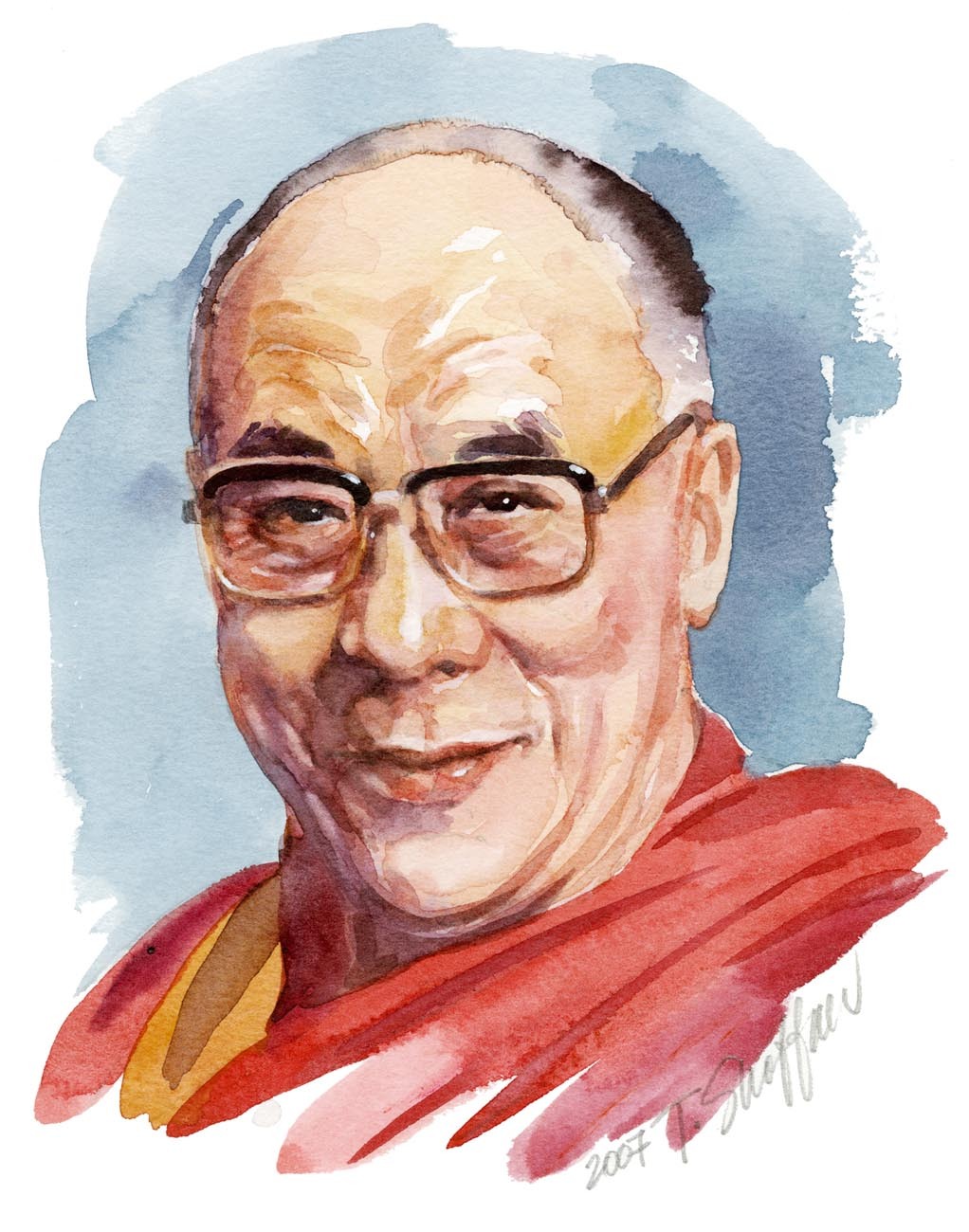

Scene 3: “Press Mayhem”

Journalists swarm.

  • BBC reporter: “President Putin, what made you change your mind?”
    Putin: “Less NATO. More Namaste.”

  • CNN reporter: “President Zelensky, is this real peace?”
    Zelensky: “As real as a cucumber mask.”

Dalai Lama interrupts the frenzy:

“Peace is not an event. Peace is a practice. Today is just the first inhale.”


Scene 4: “The Photo Op”

The iconic image is staged:

  • Putin draped in a Tibetan white scarf.

  • Zelensky holding prayer beads.

  • Dalai Lama in the middle, beaming.

  • The goat, uninvited, sneaks into frame.

The cameras flash. The photo instantly trends worldwide with the hashtag #OmStopTheWar.


Scene 5: “The Epilogue”

As evening falls, the three men sit together quietly on the monastery steps. The valley glows with lanterns.
Dalai Lama speaks softly:

“Cold War ended not because weapons vanished, but because tension dissolved. Today, two men dissolved a little of their tension. Tomorrow, maybe more.”

Putin exhales, long and deep. Zelensky matches him. For once, they breathe in rhythm.

Final shot: the prayer flags flutter, the bell rings once more, and the screen fades to black.


The Dharamshala Accord — Series Finale ✨

Tagline on screen: “The war ended… not with a bang, but with an Om.”


Monday, August 28, 2017

Doka La Standoff: China Proved Its Point On Tibet


If in 1890 the British Empire recognized Tibet to have been Chinese territory and dealt with the Chinese state on all matters Tibet, perhaps it is not true that China invaded Tibet in the 1950s. That is the point China intended to prove through this standoff and it has done so. China did not back down. China proved its point. Done and over with.