Friday, August 28, 2026


Wednesday, May 27, 2026
DemocracyTech: How Digital Tools and Diaspora Power Can Topple Iran's Regime
The Terrorist as Pioneer: Understanding the Expansionist Logic of Jihad
Mandela Fought For Equality, Not Reverse Apartheid
Elon Musk Is Shahrukh Khan: How?
Julius Malema: South Africa’s Greatest Populist Punk, Now Available in 280-Character Doses
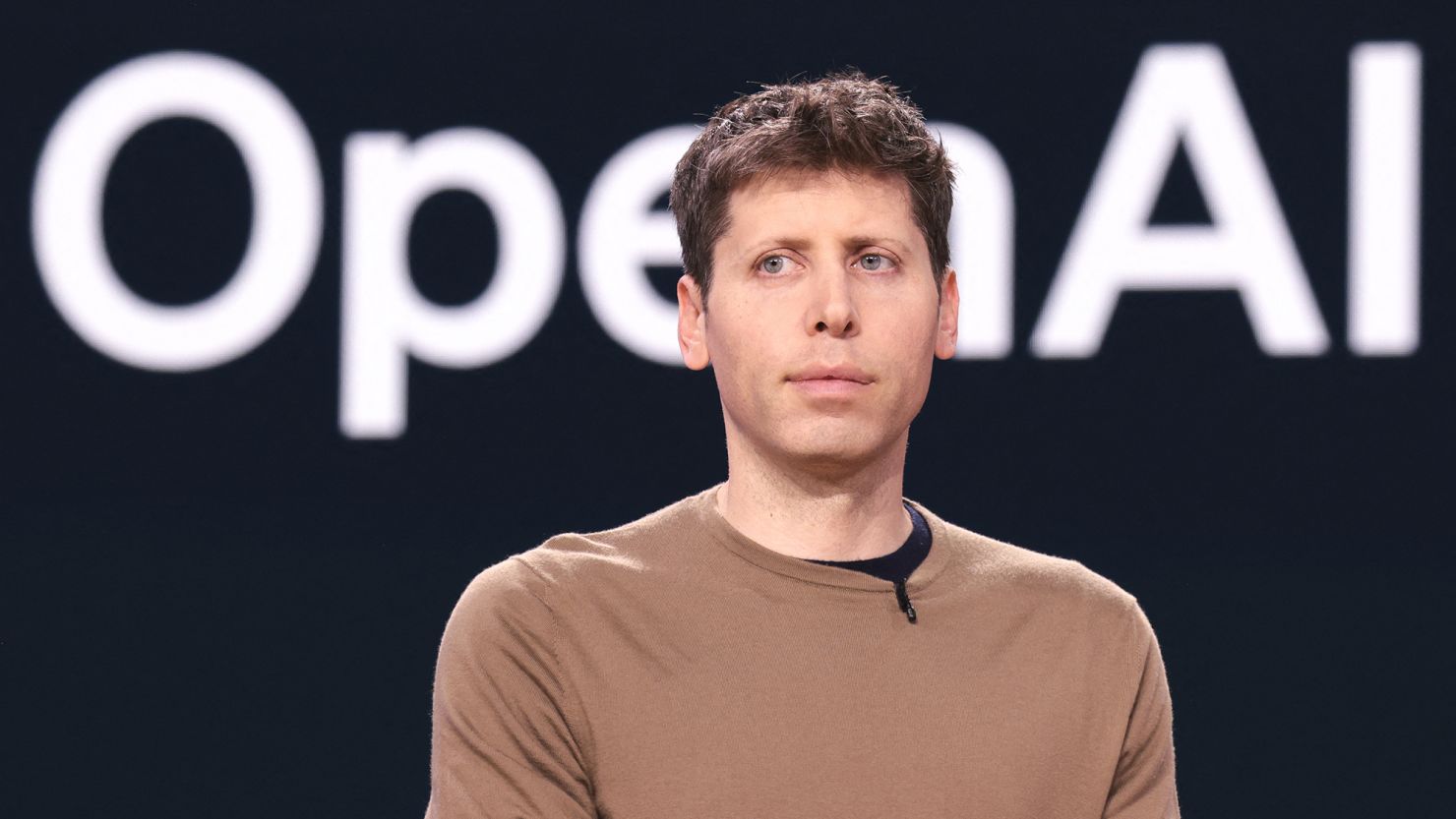
AI should dramatically increase quality of life and individual freedoms for people around the world.
— Sam Altman (@sama) May 27, 2026
The OpenAI Foundation is making an initial $250M commitment to measurement, transition support, and new approaches to broadly shared prosperity.https://t.co/zOD8O94RjQ
The struggle for democracy in Iran has reached a critical juncture. The U.S. military has exhausted its options, and while diplomacy continues and can achieve more, the finesse required for total victory—regime collapse and the genuine installation of democracy—must come from democracy itself. The work of building democracy will be done through democratic means, and the Iranian diaspora must now step up. I am ready to help lead that effort. A Proven Track Record in NepalI have done this before. In 2005–2006, during Nepal’s democracy movement against King Gyanendra’s coup, I was the only full-time Nepali activist based in the United States dedicated to the cause. Using purely digital methods—a blog (Democracy For Nepal), the world’s largest Nepali mailing list at the time (around 10,000 subscribers), deep domain expertise, conviction, courage, and clarity—I played a role in a remarkable non-violent transition.
German Radio dubbed me the “Robin Hood On The Internet.” Without trillions of dollars in military spending (unlike U.S. efforts in Iraq and Afghanistan), we helped force a dictator to yield power. Over 19 days in April 2006, roughly eight million of Nepal’s 27 million people took to the streets, shutting down the country and compelling political change. Subsequent milestones followed in 2007 and 2008.
The butterfly effect is real: a digital activist in New York City helped generate political cyclones in the Himalayas. All my moves were documented in real time and remain archived in the public domain for anyone to verify. Introducing DemocracyTechToday, I am creating a new category: DemocracyTech. Just as FinTech revolutionized finance and DefenseTech transformed security, DemocracyTech can empower people against brutal regimes by lowering barriers to collective action.
The tools available now—far beyond the primitive blogging and email lists of 2005—are exponentially more powerful. With them, we can build platforms that neutralize the Iranian regime’s brutality by making every participating Iranian a node in a decentralized network, not dependent on a few prominent voices. This creates resilience, scale, and unstoppable momentum from the diaspora inward to the streets of Iran. A Practical Path ForwardThe U.S. should focus on negotiating a deal to open the Strait of Hormuz, bring a temporary but firm halt to active conflict while maintaining a regional presence, and pursue a final agreement over weeks or months rather than in haste. End the blockade and provide calibrated sanctions relief as concrete milestones toward democratization are achieved—but do not rush a final deal that leaves the current regime intact.
I need just a few short months to build and deploy the DemocracyTech tools tailored for the Iranian diaspora. With those in place, the regime’s days are numbered. The Iranian street will handle the eruptions; the U.S. military should stand down from offensive operations but stand by to deter or respond to mass atrocities—such as Basij forces firing indiscriminately into crowds.
Avoid misguided ideas like taking down Iran’s energy grid. That would hand the IRGC leverage over the Strait of Hormuz in a non-reversible way while weakening the very people needed for revolt. Suffering populations do not rise more effectively; they are diminished.Why Finish the Job Now?If a final deal props up the regime without fundamental change, we will face another, more dangerous war in a few years. A regime that has raced toward nuclear weapons, with more advanced missiles and drones, will be even harder to confront. Better to seize this moment. The next phase belongs to the Iranian people and their empowered diaspora. U.S. forces: stand down, and stand by. Funding the VisionThis effort requires $100 million. I call on Sam Altman and OpenAI to step forward. OpenAI’s nonprofit foundation has resources dedicated to initiatives that can advance democratic principles and societal resilience in the age of AI. The DemocracyTech platform I envision would be open-source and adaptable for any diaspora or democracy movement worldwide.
The beauty of this approach is its decentralization: every participant becomes a node. Success does not hinge on single leaders like Reza or Masih but on a robust, tech-enabled network. With the right tools, conviction, and a supportive international framework, the Iranian people can achieve what external military force alone cannot.
The archives from Nepal stand as proof. The butterfly is ready to flap its wings again—this time for Iran.
Paramendra Bhagat is a New York City-based tech entrepreneur and activist. Read more at Democracy For Nepal and related blogs.
The struggle for democracy in Iran is at a decisive turning point. While U.S. military and diplomatic efforts have reached their limits in many respects, the final phase—regime collapse and the establishment of genuine democracy—requires the finesse of democracy itself. The Iranian diaspora must now lead, supported by cutting-edge tools. I am prepared to step in and help build that bridge.Lessons from Nepal: A Proven Digital ModelIn 2005–2006, I worked full-time from the United States as the only Nepali activist fully dedicated to toppling King Gyanendra’s coup. Through a blog (Democracy For Nepal), the largest Nepali mailing list in the world (reaching 10,000 subscribers), domain expertise, and relentless digital coordination, we helped spark a non-violent people’s movement. German Radio called me “Robin Hood On The Internet.” In April 2006, roughly eight million Nepalis—out of a population of 27 million—took to the streets over 19 days, shutting down the country and forcing the dictator to yield. All actions were 100% digital and remain publicly archived.
The butterfly effect in action: one activist in New York helped generate political cyclones in the Himalayas—without trillions spent on military campaigns.Introducing DemocracyTech for IranToday’s tools are vastly more powerful. I am pioneering DemocracyTech—a new category that lowers barriers to collective action, making every participating Iranian a resilient node in a decentralized network rather than relying on a handful of prominent figures. This approach neutralizes much of the regime’s brutality by enabling secure, scalable coordination from the diaspora directly into Iran.The Need for Strategic Collaboration with AndurilTo protect protesters and ensure street eruptions can reach a tipping point, DemocracyTech must integrate with appropriate DefenseTech capabilities. I will need drones to provide air cover when the Iranian people take to the streets. These drones can prevent Basij goons on motorcycles from launching surprise attacks and indiscriminately spraying crowds with machine-gun fire.
Anduril is the ideal partner for this component. A collaboration between DemocracyTech (focused on coordination, communication, and diaspora mobilization) and Anduril (providing responsible drone systems for overwatch and deterrence) would create a powerful synergy. Once a critical mass of protesters is protected and the momentum becomes unstoppable, the regime will become utterly helpless. The security forces’ ability to intimidate evaporates when they can no longer act with impunity.
This is not about offensive warfare but about safeguarding non-violent democratic expression against a brutal apparatus.A Calibrated U.S. Role: Negotiate, Stand By, and SupportThe United States should negotiate a deal that opens the Strait of Hormuz, establishes a durable halt to active conflict while maintaining regional presence, and pursues a final agreement over weeks or months—not in haste. Calibrated sanctions relief should be tied to clear democratization milestones, but the deal must not prematurely legitimize the current regime.
I need a few short months to build and deploy the DemocracyTech platforms. The U.S. military should stand down from direct offensive operations but stand ready to deter or respond to large-scale atrocities. Avoid counterproductive moves like attacking the energy grid, which would only empower the IRGC and further weaken the population needed for revolt.Why We Must Finish the JobA rushed deal that leaves the regime in place virtually guarantees a more dangerous war in a few years—against a nuclear-threshold Iran with advanced missiles and drones. Better to enable the Iranian people to finish the transition now through empowered street action, backed by smart technology.Funding and Scaling the VisionThis effort requires $100 million. I call on Sam Altman and OpenAI’s foundation—already positioned with significant resources for high-impact societal initiatives—to support the development of DemocracyTech. The resulting platform will be adaptable for other diaspora movements worldwide, creating a lasting toolkit for global democracy.
With DemocracyTech handling coordination and Anduril-enabled drone systems providing protective air cover, the Iranian diaspora and the people inside Iran can achieve what external military force alone has not. Every participant becomes a node. The butterfly is ready to flap its wings once more—this time with vastly superior tools.
The archives from Nepal stand as open proof of concept. The time for Iran is now.
Paramendra Bhagat is a New York City-based tech entrepreneur, activist, and proponent of DemocracyTech. Archives and writings are available at Democracy For Nepal and related platforms.

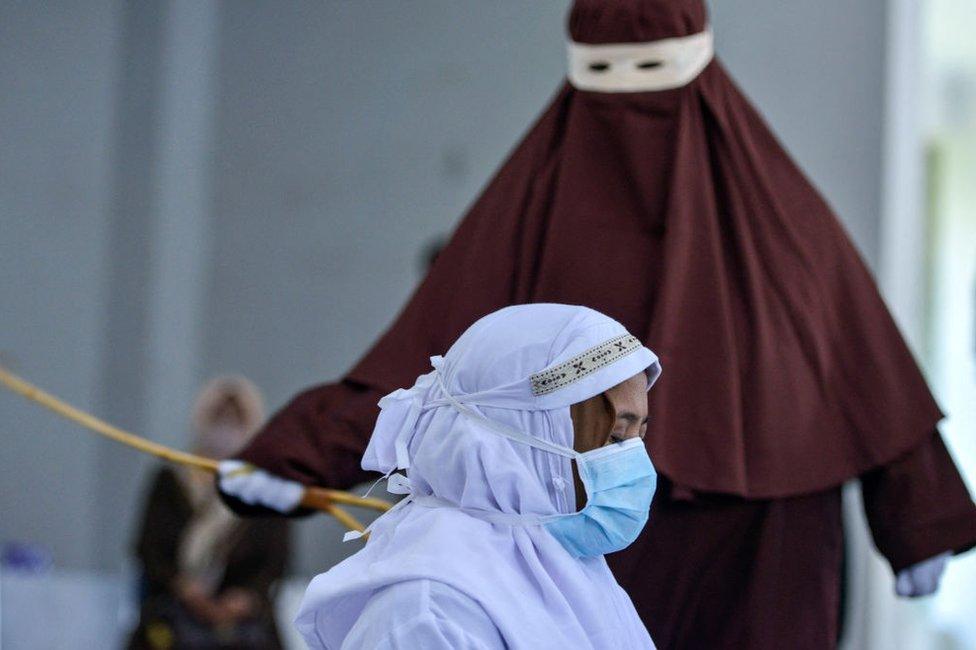
Islam, as currently constituted in its orthodox political form, is a fragile ideology that tends to dissolve when exposed to genuine democratic principles. It relies heavily on coercion, legal supremacy, and restrictions on individual choice. Remove those props, apply consistent liberal norms, and much of its structural power evaporates.The Sharia TestConsider Sharia law. Many Muslims in Europe and America acknowledge that certain aspects are problematic—corporal punishments, unequal inheritance, restrictions on women—while claiming other elements are beneficial. Fair enough. In a democracy, the proper response is straightforward: run for office, win elections, and persuade your fellow citizens to adopt those “good” aspects as secular law that applies equally to everyone—Muslim and non-Muslim alike.
That is the only legitimate path. Special parallel legal systems for Muslims undermine the rule of law and equality before it. When Muslims are forced to defend Sharia provisions through open debate, evidence, and universal application, the project collapses. Most elements lack broad appeal in free societies and contradict core democratic values. The insistence on Sharia as a separate, divinely mandated system for Muslims only reveals its incompatibility with pluralistic governance. Take the democratic stand, and Sharia—and with it much of political Islam—dissolves.The Apostasy Test and Freedom of ReligionThe same logic applies to freedom of religion. If Islam is truly a great religion, then adults should be free to embrace it voluntarily. By the same token, those born into it or who once believed must have the absolute right to leave without fear of punishment.
Yet traditional Islamic doctrine treats apostasy as a capital offense in many interpretations. Enforcing death threats, social ostracism, or legal penalties for leaving the faith is primitive coercion—the ultimate form of suppressing individual conscience. In any modern, civilized society, there is no room for it.
When societies adopt true freedom of religion as the operating system—complete with the right to change or abandon faith—Islam faces an existential challenge. Without the threat of violence or severe social penalties holding people in place, retention rates and cultural dominance weaken. Many quietly drift away or reform their beliefs. Without coercion, the system does not hold water; it withers on its own.A Religion Built on ControlThis pattern is not accidental. Political Islam has historically expanded and maintained itself through conquest, dhimmi rules, blasphemy taboos, and apostasy enforcement. In open, secular democracies that prioritize individual rights, equal citizenship, and freedom of exit, these mechanisms lose their grip. Muslims who genuinely wish to practice a personal, spiritual version of the faith can do so. But the political and legal superstructure that demands supremacy and punishes dissent struggles to survive scrutiny and choice.
Critics who call for reform or honest debate are often met with accusations of bigotry rather than substantive defense. This defensiveness itself signals weakness. Strong ideas and institutions withstand open competition; fragile ones require protection from it.The Path Forward for Liberal SocietiesWestern nations, and any aspiring democracy, should apply these tests consistently:
- One law for all. No parallel Sharia systems.
- Absolute freedom to enter or exit any religion.
- No tolerance for threats, violence, or intimidation against apostates, reformers, or critics.
- Equal rights and responsibilities regardless of faith.
Islam does not need to be “destroyed.” It simply needs to face the same standards that every other religion and ideology must confront in a free society: persuasion instead of force, equality instead of supremacy, and voluntary participation instead of inherited obligation backed by threats.
Under real democracy and individual rights, its political form dissolves—not through violence, but through the quiet, relentless pressure of freedom itself.

Elon Musk has repeatedly voiced deep concerns about the rising criminality, corruption, and racially divisive policies in his native South Africa. From farm attacks and violent crime to Black Economic Empowerment (BEE) laws that he has described as racist and counterproductive, Musk has highlighted how the country is straying from Nelson Mandela’s vision of a non-racial democracy.
I have a direct proposal for him: a Nepal-style people-powered revolution driven by Gen Z, enabled by modern DemocracyTech. All it needs is $30 million to build the tools and ignite the movement.Proven in Nepal, Ready for South AfricaIn 2005–2006, I led digital efforts from New York City to support Nepal’s democracy movement against King Gyanendra’s coup. Using a blog, the largest Nepali mailing list in the world, and relentless online coordination, we helped spark massive street protests. German Radio called me “Robin Hood On The Internet.” In April 2006, around eight million Nepalis out of 27 million shut down the country for 19 days, forcing the dictator from power. All moves are archived and verifiable.
No trillions in military spending. Just digital tools, diaspora energy, conviction, and the butterfly effect in action.
South Africa today is ripe for a similar non-violent, youth-led uprising — this time against entrenched corruption, crime, and failing governance. With today’s vastly superior technology, the impact could be even faster and more decisive.DemocracyTech: The Modern ToolkitI am building DemocracyTech — platforms that lower barriers to participation, create decentralized networks where every young South African becomes a node, and enable secure, scalable coordination between the diaspora and those on the ground. This neutralizes intimidation tactics and builds unstoppable momentum for reform.
A $30 million investment would fund the development and deployment of these tools tailored for South Africa. Gen Z, already digitally native and frustrated with the status quo, would drive the street eruptions. The goal: restore the rule of law, reduce crime, dismantle corrupt patronage systems, and move toward genuine equality and opportunity for all citizens.A Public Offer to Elon MuskI have made this offer publicly to Elon Musk. Either the message has not reached him amid his many responsibilities, or he has not yet seen the potential in this low-cost, high-leverage approach compared to traditional political or investment routes.
Elon understands exponential technology and first-principles thinking. DemocracyTech aligns perfectly: use modern tools to solve root problems at the societal level rather than treating symptoms. South Africa’s challenges — crime, corruption, policy failures — are eroding the country’s future. A digitally empowered people’s movement could deliver the reset it needs without external overreach.Why This Matters NowSouth Africa cannot afford further decline. High crime rates terrorize communities, corruption stifles investment, and race-based policies risk deepening divisions instead of healing them. A Nepal-inspired model offers a peaceful, democratic path forward: massive, coordinated civic action that forces accountability and reform.
The U.S. and international community should support such internal democratic renewal. Musk, with his roots in South Africa and commitment to bold solutions, is uniquely positioned to back this effort.
I stand ready. $30 million to build the DemocracyTech infrastructure. Let Gen Z lead the revolution. Archive the results in real time, just as in Nepal.
The butterfly is prepared to flap its wings again — this time in Pretoria and Johannesburg.
Paramendra Bhagat is a New York-based tech entrepreneur, activist, and founder of the DemocracyTech initiative. Previous work and archives are available at Democracy For Nepal and related platforms.

This effort requires $100 million. I call on Sam Altman and @OpenAI to step forward. https://t.co/S1IF0BK29G DemocracyTech: How Digital Tools and Diaspora Power Can Topple Iran's Regime @sama @SpencerGuard @AlinejadMasih @PahlaviReza @SecRubio @realDonaldTrump @netanyahu
— Paramendra Kumar Bhagat (@paramendra) May 27, 2026
A $30 million investment would fund the development and deployment of these tools tailored for South Africa. Gen Z, already digitally native and frustrated with the status quo, would drive the street eruptions. https://t.co/S1IF0BK29G @elonmusk @kimbal @mayemusk @errol_lyndon_KL
— Paramendra Kumar Bhagat (@paramendra) May 27, 2026
🦋 DemocracyTech: Digital Tools for Global Regime Change: Overthrowing Dictators With Drones And Code https://t.co/DrSD7zP5KZ
— Paramendra Kumar Bhagat (@paramendra) May 27, 2026
The struggle for democracy needs a new weapon: DemocracyTech. I proved it works in Nepal 2005-06. One full-time digital activist in NYC + blog + mailing list helped spark a revolution. 8 million people on streets. King toppled. 👇 @AlinejadMasih @IranRights_org @IHRights
— Paramendra Kumar Bhagat (@paramendra) May 27, 2026
German Radio called me “Robin Hood On The Internet.” Butterfly effect in action. All archived. 🧵👇👆🇳🇵 @HumanRightsIran @NiohBerg @PahlaviReza @NoorPahlavi @ShahbanouFarah @kosareftekharii @simamoradb51053 @MarziehHamidi @shervin @spencerguard @realRayanAmiri pic.twitter.com/y1fPbwTblA
— Paramendra Kumar Bhagat (@paramendra) May 27, 2026
Lowers barriers. Neutralizes brutality. Ready for Iran & South Africa. 👇👆 @IranRights_org @AmnestyIran @ICHRI @IranWireEnglish @Tavaana @SMohyeddin @GissouNia @NazaninAJ @LadiKhanom @kshahrooz @AlinejadMasih @IranRights_org @IHRights @HumanRightsIran
— Paramendra Kumar Bhagat (@paramendra) May 27, 2026
Add DefenseTech collaboration with Anduril: drones for air cover when people protest. Stop Basij goons from massacring crowds on bikes. Protect the street eruptions. Once tipping point hits, regime collapses. 👇👆 @ICHRI @ICHRI_Fa @AmnestyIran @hra_news @kampainhr @IranWire
— Paramendra Kumar Bhagat (@paramendra) May 27, 2026
Don’t rush a deal that saves the regime. That guarantees worse war later with nukes + better missiles. Finish the job now via empowered people. Energy grid attacks? Bad idea — weakens the population. DemocracyTech + protective drones = smarter path. 👇👆
— Paramendra Kumar Bhagat (@paramendra) May 27, 2026
Why DemocracyTech works: real democracy dissolves rigid ideologies. Take Islam — Sharia only survives via parallel systems & coercion. In true democracy: one law for all (pass “good” parts via elections), full freedom to leave the faith, no death for apostasy. 👇👆
— Paramendra Kumar Bhagat (@paramendra) May 27, 2026
Freedom of religion + equal rights is the ultimate test. Strong ideas survive open debate & exit rights. Fragile ones need force, blasphemy laws & parallel legal systems. Apply consistent liberal principles and much of the expansionist superstructure dissolves naturally. 👇👆
— Paramendra Kumar Bhagat (@paramendra) May 27, 2026
Elon @elonmusk , @sama Sam Altman — the tech visionaries. This is high-leverage. DemocracyTech > endless military spending. I’m ready to build. Archives open. Let’s deliver real victories for freedom. Who’s in? #DemocracyTech #Iran #SouthAfrica
— Paramendra Kumar Bhagat (@paramendra) May 27, 2026

DemocracyTech: How Digital Tools and Diaspora Power Can Topple Iran's Regime https://t.co/S1IF0BK29G 🇮🇷🇮🇷🇮🇷🇮🇷🇮🇷🇮🇷🇮🇷🇮🇷👆👆👆👆 This will bring you 100M in orders for your drones. Pays for itself.
— Paramendra Kumar Bhagat (@paramendra) May 28, 2026
DemocracyTech: How Digital Tools and Diaspora Power Can Topple Iran's Regime https://t.co/S1IF0BK29G
— Paramendra Kumar Bhagat (@paramendra) May 28, 2026
Hey John @SpencerGuard Can you please help me with this? https://t.co/S1IF0BK29G DM open.
— Paramendra Kumar Bhagat (@paramendra) May 28, 2026
The best possible thing the Foundation could do right now is to unleash Robin Hood on Iran.
— Paramendra Kumar Bhagat (@paramendra) June 1, 2026
DemocracyTech: How Digital Tools and Diaspora Power Can Topple Iran's Regime https://t.co/S1IF0BK29G