Trump Tariff Trouble His doublethink may be too much even for the supine Supremes .......... On April 2 — “Liberation Day” — Donald Trump imposed huge tariffs on scores of countries, including our closest allies as well as islands inhabited only by penguins. In one fell swoop he reversed 90 years of U.S. trade liberalization and violated solemn international agreements. Trump didn’t try to get his tariffs enacted by Congress (which, compliant as Republicans are, wouldn’t have passed them.) Instead he imposed tariffs by executive fiat, invoking the 1977 International Emergency Economic Powers Act — a law that was clearly intended to respond to, you know, emergencies.
It was clearly not intended to bestow upon the president the right to do whatever he wants.
................... Trump’s signature economic policy may soon melt down into a puddle of incompetence and humiliation. If that should happen, I will celebrate both the end of an extraordinarily bad policy and the Supreme Court’s willingness to (finally!) check Trump’s authoritarian behavior. ............ the Court for International Trade, in their ruling against the Trump tariffs, made a different argument. The Emergency Powers Act only empowers the president to act in response to economic emergencies. And while the White House has declared two such emergencies —trade deficits and fentanyl — the CIT found that neither declaration provided a plausible rationale for the actual tariffs Trump imposed. ............ More broadly, supporting Trump’s tariffs requires engaging in doublethink. You have to believe Trump’s assertions that everything is wonderful, that this is the best economy ever. But you also have to believe that we’re facing an economic emergency that justifies massive tariff increases, hitting almost every nation and abrogating generations’ worth of international agreements.
Justice Kagan came close to acknowledging this doublethink by caustically saying “It turns out we’re in emergencies all the time.”
.............. With the Justices suggesting that Trump’s tariffs infringe on Congress’s unique right to set tax rates, Sauer declared that “they are not revenue-raising tariffs”. That’s essentially an impossible position to argue .......... So the tariffs are legal because they aren’t revenue-raising; also, look at how much revenue they’re raising! The fact that Trump’s own statements completely contradict his lawyers’ arguments explains why even a Supreme Court that normally bends itself into a pretzel to ratify administration policies will probably find his “emergency” tariffs a pretzel too far. ...............
it will be a humiliating defeat for Trump.
It will also create enormous uncertainty. For Trump won’t give up. Instead, he has already promised that he will try to reimpose the tariffs by using — or, actually, abusing — different legal avenues. ............. Trump has been especially fond of Section 232, invoking “national security” as a reason for tariffs on quite a few items that don’t seem especially tied to strategic defense. ......... Imagine what would happen if we were to get involved in a global conflict and were dependent on China for our crucial supplies of love seats and bathroom vanities! ................. The potential for Trump to declare faux national threats is why I am uncomfortable with the Supreme Court ruling against Trump’s IEEPA tariffs on the basis of the constitutional right to levy taxes. With a president as unscrupulous as Trump, we need a precedent against imposing tariffs on the basis of obviously false claims of national emergency. ...........
these tariffs are bad for Americans and bad for the rest of the world
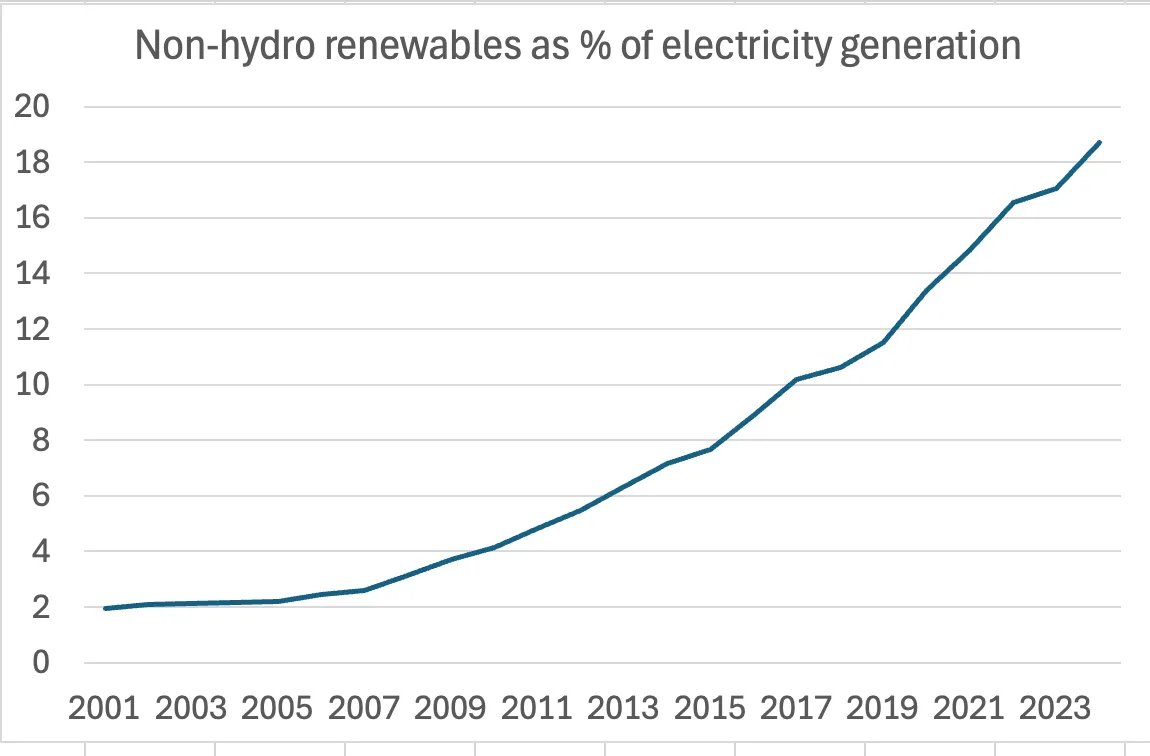
The Rise of Renewable Energy Anatomy of a technological miracle .............. Donald Trump and his officials hate, just hate wind and solar power, and there are many people who still refuse to believe that renewables can be practical even as renewables keep growing around the world, in fact accounting for the bulk of growth in electricity generation. ..............
How did energy sources that a generation ago were widely dismissed as hippie fantasies become a major source of electricity?
Genetic analysis proved that Mr. Li Dan, who kept spreading Buddhism in northern China 1400 years ago, is an ancient Indian descendant.
His tomb in northern China contained both Chinese and Indian elements, which is a gem of cultural exchanges on the Silk Road.🤝🤝 pic.twitter.com/i0EsN9HZdc
In 5 years from now, probably 95% of the tokens used by AI agents will be used on tasks that humans never did before.
I just met with about 30 enterprises across 2 days and a dinner, and some of the most interesting use-cases that keep coming up for AI agents are on bringing…
Supreme Court and Trump’s Tariffs: Will the Justices Side with the President?
The ongoing legal battle over President Trump’s sweeping “Liberation Day” tariffs has set the stage for one of the most consequential Supreme Court cases on executive power and trade in decades. At the center lies a fundamental question: can a president unilaterally impose tariffs on nearly every trading partner under the International Emergency Economic Powers Act (IEEPA), or does that authority belong to Congress?
The tariffs, announced in 2025, cover a broad swath of imports and were justified by the White House as necessary to curb fentanyl flows, address trade imbalances, and safeguard national security. Yet on August 29, 2025, the U.S. Court of Appeals for the Federal Circuit ruled 7–4 that most of these tariffs exceeded the president’s legal authority, arguing they stretched IEEPA far beyond its intended scope of “unusual and extraordinary threats.” The ruling is temporarily stayed until October 14, giving the Trump administration a chance to appeal to the Supreme Court. Trump has already vowed to move “immediately,” raising the stakes in what could become a defining constitutional showdown.
A Conservative Court with a Trumpian Tilt
The Supreme Court’s 6–3 conservative majority, including three justices appointed by Trump himself (Gorsuch, Kavanaugh, and Barrett), forms the backdrop for this clash. In recent years, the Court has often expanded presidential power—whether by overturning Chevron deference, granting immunity in certain cases, or siding with executive prerogatives. Historically, courts have also deferred heavily to the executive in matters of foreign affairs and trade. The 1936 case United States v. Curtiss-Wright Export Corp. remains a cornerstone, granting the president “plenary and exclusive power” in external relations.
That history, combined with recent rulings, suggests Trump may find a sympathetic ear at the Court. Indeed, the dissenting judges at the appellate level argued the tariffs were consistent with the broad authority IEEPA confers.
The Counterweight: Major Questions Doctrine
Yet Trump’s path is not guaranteed. The Court’s conservatives, particularly Chief Justice John Roberts and Justice Neil Gorsuch, have embraced the “major questions doctrine,” which holds that sweeping policy shifts with major economic consequences require clear congressional authorization. This principle was central in West Virginia v. EPA (2022), which curtailed regulatory overreach.
Applied here, the doctrine could cut against Trump: his tariffs are effectively a multi-trillion-dollar tax program, imposing what analysts call a $1,200–$2,800 annual tax hike on the average U.S. household. Critics argue that no statute—certainly not IEEPA—grants such sweeping power without congressional approval. Lower courts also emphasized that there is no “true emergency” justifying IEEPA’s invocation, a point the Supreme Court may find compelling.
Political and Business Pushback
The business community has lined up in opposition. Groups like the U.S. Chamber of Commerce, the Consumer Technology Association, and the National Retail Federation argue that the tariffs disrupt supply chains, fuel inflation, and invite retaliatory measures from trading partners. Polls reflect this unease:
Pew Research (Aug. 2025): 61% disapprove of the tariffs; only 38% approve.
Gallup/CTA (Jul.–Aug. 2025): 56% say tariffs harm the economy; 65% fear for family finances.
Navigator Research (May 2025): 56% oppose tariffs, up 15 points since Trump’s inauguration.
Even among Trump voters, nearly half worry about rising prices. Social media sentiment mirrors this, with critics labeling tariffs “inflation bombs,” though supporters frame them as “tough love” for global trade.
The Likely Path Through the Court
If the Supreme Court accepts the case (almost certain, given its national significance), oral arguments would likely occur in late 2025 or early 2026, with a decision by June 2026. Trump’s expedited filing could push arguments into winter 2025. In the meantime, the Court could extend the stay, allowing tariffs to remain in effect during litigation—a practical win for Trump even before a ruling.
The dynamic of a fully argued case (with briefs, oral arguments, and extensive amicus filings) makes it harder to brush aside the lower courts’ findings. Still, history shows that the Court can and does overturn argued cases—consider Biden v. Nebraska (2023), where the justices struck down the student loan forgiveness plan despite broad lower-court backing.
Projected Economic Fallout
If upheld, the tariffs would bring mixed economic consequences:
Short-Term Revenue vs. Growth: Revenues might add 0.57% to GDP, but growth could decline by 0.5% annually through 2026.
Household Costs: Families face $1,200–$2,800 in added expenses annually.
Employment: Construction employment could shrink 2.9%; agriculture and manufacturing also face sharp downturns.
Global Trade: Retaliation from the EU, China, and others could slash U.S. exports, while global supply chains would experience renewed disruption.
If reversed, the opposite holds: lower inflation, stabilized trade, but diminished U.S. leverage in negotiations.
Political Stakes: 2026 Midterms and Beyond
The political implications are no less significant. Rising costs tied to tariffs could erode Trump’s approval, with polls already showing discontent. Quinnipiac finds Americans believe 3-to-1 that tariffs raise consumer prices, and even one-third of Trump supporters say they would reconsider their stance if inflation worsens.
Midterm dynamics add to the risk. Historically, presidents lose an average of 28 House seats in their first midterms. Trump’s razor-thin majorities are particularly vulnerable. GOP-led gerrymanders in Texas, Florida, and Ohio may secure some buffer, but backlash could still flip the House if inflation becomes a top voter concern. Analysts at Brookings project the GOP could keep the Senate but lose the House narrowly.
Odds of a Trump Win
Taking the legal, political, and historical factors together, the most probable outcome is a 6–3 Supreme Court decision in Trump’s favor. The Court’s conservative majority, combined with traditional deference to presidential power in foreign affairs, likely outweighs statutory and economic concerns.
That said, the major questions doctrine remains a wild card. If Roberts or Gorsuch breaks ranks, the ruling could tighten to 5–4—or even tilt against Trump. Still, current expert and social media consensus puts Trump’s odds of prevailing at around 70%.
Conclusion
The Supreme Court’s impending decision on Trump’s “Liberation Day” tariffs will be about far more than trade policy. It will determine whether presidents can wield near-plenary power over the global economy under the banner of “emergency authority,” or whether Congress must reclaim its constitutional role in setting tariffs.
If Trump wins, America faces prolonged economic turbulence and political risks for his party, but the presidency itself emerges stronger. If he loses, markets stabilize, inflationary pressure eases, and Congress reasserts itself—at the cost of Trump’s signature agenda.
Either way, this case could redefine the balance of power in Washington for a generation.
सर्वोच्च न्यायालय और ट्रंप के टैरिफ़: क्या न्यायमूर्ति राष्ट्रपति के पक्ष में होंगे?
राष्ट्रपति डोनाल्ड ट्रंप द्वारा लागू किए गए व्यापक "लिबरेशन डे" टैरिफ़ को लेकर कानूनी लड़ाई अमेरिकी इतिहास के सबसे महत्वपूर्ण मामलों में से एक बन सकती है। यह मामला केवल व्यापार नीति का नहीं है—यह इस मूलभूत प्रश्न पर केंद्रित है कि क्या एक राष्ट्रपति अकेले ही अंतरराष्ट्रीय आपातकालीन आर्थिक शक्तियाँ अधिनियम (IEEPA) के तहत लगभग हर व्यापारिक साझेदार पर टैरिफ़ लगा सकता है, या यह अधिकार कांग्रेस का है?
2025 में घोषित इन टैरिफ़ों ने विशाल मात्रा में आयात को लक्षित किया। व्हाइट हाउस ने इन्हें फ़ेंटानिल प्रवाह, व्यापार असंतुलन और राष्ट्रीय सुरक्षा के खिलाफ़ ज़रूरी कदम बताया। लेकिन 29 अगस्त 2025 को संघीय अपील अदालत (U.S. Court of Appeals for the Federal Circuit) ने 7–4 के फ़ैसले में कहा कि अधिकांश टैरिफ़ राष्ट्रपति की क़ानूनी शक्तियों से परे हैं। अदालत ने दलील दी कि IEEPA का उद्देश्य केवल “असामान्य और असाधारण ख़तरों” से निपटना है, न कि कांग्रेस के टैरिफ़ अधिकारों को छीनना। यह फ़ैसला 14 अक्तूबर तक रोका गया है ताकि प्रशासन सर्वोच्च न्यायालय में अपील कर सके। ट्रंप पहले ही घोषणा कर चुके हैं कि वे तुरंत अपील करेंगे, जिससे एक बड़ा संवैधानिक टकराव लगभग तय है।
एक रूढ़िवादी झुकाव वाला न्यायालय
सर्वोच्च न्यायालय में 6–3 का रूढ़िवादी बहुमत है, जिसमें तीन न्यायाधीश (गोरसच, कवानॉ, और बैरेट) ट्रंप की पहली अवधि में नियुक्त हुए थे। हाल के वर्षों में अदालत ने बार-बार राष्ट्रपति की शक्तियों को बढ़ाया है—चाहे Chevron सिद्धांत को पलटना हो, इम्युनिटी संबंधी मामलों में राहत देना हो, या कार्यकारी आदेशों का समर्थन करना हो।
इतिहास भी कार्यपालिका के पक्ष में झुका है। United States v. Curtiss-Wright Export Corp. (1936) जैसे फैसले ने राष्ट्रपति को विदेश नीति में "विशिष्ट और व्यापक शक्ति" प्रदान की थी। ऐसे में ट्रंप के पक्ष में सहानुभूति मिलने की संभावना मजबूत लगती है।
"मुख्य प्रश्न सिद्धांत" की चुनौती
फिर भी रास्ता आसान नहीं है। अदालत के कुछ रूढ़िवादी न्यायाधीश—विशेष रूप से मुख्य न्यायाधीश जॉन रॉबर्ट्स और न्यायमूर्ति गोरसच—"मुख्य प्रश्न सिद्धांत" (Major Questions Doctrine) का समर्थन करते रहे हैं। इस सिद्धांत के अनुसार, कोई भी बड़ा आर्थिक या सामाजिक नीति परिवर्तन स्पष्ट रूप से कांग्रेस की मंज़ूरी के बिना मान्य नहीं हो सकता।
चूँकि ये टैरिफ़ लाखों परिवारों पर $1,200–$2,800 प्रतिवर्ष का अतिरिक्त बोझ डालते हैं, विरोधियों का कहना है कि इतने बड़े कदम के लिए IEEPA पर्याप्त आधार नहीं है। निचली अदालतों ने भी कहा कि यहाँ कोई “वास्तविक आपातकाल” मौजूद नहीं है। यह दलील सर्वोच्च न्यायालय को प्रभावित कर सकती है।
राजनीतिक और व्यावसायिक विरोध
व्यापारिक संगठन पूरी तरह विरोध में हैं। यू.एस. चैंबर ऑफ कॉमर्स, कंज़्यूमर टेक्नोलॉजी एसोसिएशन और नेशनल रिटेल फेडरेशन जैसे समूहों का कहना है कि टैरिफ़ आपूर्ति श्रृंखलाओं को बाधित करते हैं, मुद्रास्फीति बढ़ाते हैं और विदेशी प्रतिशोध को आमंत्रित करते हैं। जनमत सर्वेक्षण भी यही दिखाते हैं:
गैलप/CTA (जुलाई–अगस्त 2025): 56% कहते हैं टैरिफ़ अर्थव्यवस्था को नुकसान पहुंचाते हैं; 65% पारिवारिक खर्चों को लेकर चिंतित।
नेविगेटर रिसर्च (मई 2025): 56% विरोधी—ट्रंप के शपथग्रहण के बाद से 15% वृद्धि।
यहाँ तक कि ट्रंप समर्थकों में भी लगभग आधे लोग बढ़ती क़ीमतों से चिंतित हैं।
सर्वोच्च न्यायालय में संभावित मार्ग
यह मामला राष्ट्रीय महत्व का है, इसलिए अदालत द्वारा सुनवाई स्वीकार किए जाने की संभावना लगभग तय है। सामान्य प्रक्रिया के तहत बहसें 2025 के अंत या 2026 की शुरुआत में होंगी, और निर्णय जून 2026 तक आ सकता है। यदि ट्रंप का त्वरित आग्रह स्वीकार होता है, तो सुनवाई सर्दियों में ही शुरू हो सकती है। इस बीच अदालत रोक (stay) को बढ़ा सकती है, जिससे मुक़दमे के दौरान भी टैरिफ़ लागू रहेंगे—यह स्वयं में ट्रंप के लिए एक आंशिक जीत होगी।
संभावित आर्थिक असर
यदि टैरिफ़ बरकरार रहते हैं, तो परिणाम मिश्रित होंगे:
राजस्व बनाम वृद्धि: जीडीपी में अल्पकालिक 0.57% वृद्धि, लेकिन 2026 तक वार्षिक वृद्धि दर में 0.5% गिरावट।
परिवारिक लागत: प्रति परिवार $1,200–$2,800 का अतिरिक्त बोझ।
रोज़गार: निर्माण क्षेत्र में 2.9% तक कमी; कृषि और विनिर्माण पर भी बड़ा असर।
वैश्विक व्यापार: चीन और यूरोप जैसे साझेदारों की प्रतिक्रिया से अमेरिकी निर्यात घट सकता है, और वैश्विक आपूर्ति श्रृंखलाओं में अव्यवस्था बढ़ेगी।
यदि टैरिफ़ पलट दिए जाते हैं, तो मुद्रास्फीति घटेगी, बाज़ार स्थिर होंगे, लेकिन अमेरिका की वार्ता क्षमता कमजोर पड़ जाएगी।
राजनीतिक प्रभाव: 2026 मध्यावधि चुनाव
राजनीतिक दृष्टि से भी यह बड़ा मुद्दा है। बढ़ती क़ीमतें ट्रंप की लोकप्रियता को नुकसान पहुँचा सकती हैं। क्विनिपियाक के अनुसार, अमेरिकी जनता का मानना है कि टैरिफ़ से उपभोक्ता क़ीमतें तीन गुना ज़्यादा बढ़ेंगी। यहाँ तक कि ट्रंप समर्थकों में से एक-तिहाई तक अपना समर्थन वापस ले सकते हैं यदि महँगाई बढ़ती रही।
इतिहास भी चेतावनी देता है। राष्ट्रपति की पहली मध्यावधि चुनावों में उनकी पार्टी औसतन 28 सीटें खोती है। ट्रंप की बहुमत बेहद संकीर्ण है, और यदि मुद्रास्फीति चुनावी मुद्दा बनी, तो रिपब्लिकन पार्टी हाउस खो सकती है, भले ही सीनेट पर पकड़ बनी रहे।
ट्रंप की जीत की संभावनाएँ
कुल मिलाकर, सबसे संभावित परिणाम है कि सर्वोच्च न्यायालय 6–3 के अनुपात में ट्रंप के पक्ष में फैसला देगा। विदेशी नीति और व्यापार में राष्ट्रपति की पारंपरिक शक्ति, साथ ही न्यायालय का हालिया रूढ़िवादी झुकाव, कानूनी संदेहों पर भारी पड़ सकता है।
फिर भी “मुख्य प्रश्न सिद्धांत” एक अनिश्चित तत्व है। यदि रॉबर्ट्स या गोरसच पलट गए, तो फैसला 5–4 तक सिमट सकता है—या ट्रंप हार भी सकते हैं। वर्तमान विशेषज्ञ राय और ऑनलाइन चर्चाओं के अनुसार, ट्रंप की जीत की संभावना लगभग 70% आँकी जा रही है।
निष्कर्ष
सर्वोच्च न्यायालय का यह फैसला केवल टैरिफ़ नीति का नहीं होगा। यह तय करेगा कि राष्ट्रपति “आपातकालीन शक्तियों” के नाम पर वैश्विक अर्थव्यवस्था को कितना नियंत्रित कर सकते हैं, और क्या कांग्रेस अपने संवैधानिक अधिकारों को पुनः स्थापित कर पाएगी।
यदि ट्रंप जीतते हैं, तो अर्थव्यवस्था में उथल-पुथल और राजनीतिक जोखिम बढ़ेंगे, लेकिन राष्ट्रपति पद की शक्ति और भी मज़बूत हो जाएगी। यदि वे हारते हैं, तो बाज़ार स्थिर होंगे और महँगाई घटेगी—लेकिन ट्रंप की प्रमुख नीति पर करारा झटका लगेगा।
किसी भी स्थिति में, यह मामला आने वाली पीढ़ियों तक वाशिंगटन में शक्ति संतुलन को परिभाषित कर सकता है।
Why Courts Have Ruled Trump’s Tariffs Illegal: The Key Arguments
President Donald Trump’s sweeping “Liberation Day” tariffs—imposed under the International Emergency Economic Powers Act (IEEPA)—have been one of the boldest and most controversial economic policies of his second term. The tariffs cover imports from almost every country, justified as necessary to counter trade imbalances, fentanyl trafficking, and national security risks. But two federal courts—the U.S. Court of International Trade (CIT) and the U.S. Court of Appeals for the Federal Circuit—have now declared the tariffs illegal.
The rulings reflect a consistent view: Trump’s use of IEEPA stretches the statute far beyond its intended limits, encroaches on Congress’s constitutional power over tariffs, and imposes sweeping economic burdens without any legitimate “emergency.” Below are the main arguments that have carried the day so far.
1. IEEPA Was Never Designed for Tariffs
Both courts emphasized the narrow purpose of the International Emergency Economic Powers Act. Enacted in 1977, IEEPA was designed to allow the president to block transactions and freeze assets during genuine foreign emergencies—such as terrorism, hostile foreign powers, or sanctions enforcement. It was not meant to be a back-door trade law.
CIT Finding: The tariffs were not a response to an “unusual and extraordinary threat” as required by the statute, but instead a broad economic policy tool.
Appeals Court Majority (7–4): Expanding IEEPA to cover general trade deficits and manufacturing decline would effectively rewrite the law and give the president unilateral tariff authority that Congress never granted.
2. No True “Emergency” Exists
IEEPA is explicitly limited to emergencies. Both courts rejected Trump’s claim that long-standing issues like trade imbalances or fentanyl trafficking meet that standard.
The problems cited were ongoing and systemic, not sudden crises.
The “emergency” was invoked not against a specific hostile power but against almost every trading partner simultaneously—a reading judges found implausible.
By labeling ordinary policy disputes as emergencies, the administration attempted to sidestep Congress’s role.
3. Tariffs Are Taxes—and the Constitution Grants That Power to Congress
The Constitution is unambiguous: the power to “lay and collect taxes, duties, imposts, and excises” rests with Congress. Tariffs fall squarely in that category.
Judicial Reasoning: Allowing presidents to impose universal tariffs under IEEPA would give the executive branch a power the framers specifically reserved for Congress.
Judges repeatedly invoked the principle of “no taxation without representation,” stressing that tariffs are paid by Americans—not foreign governments.
4. The Major Questions Doctrine
Building on West Virginia v. EPA (2022), both courts argued that sweeping policies with massive economic impact require clear congressional authorization. Trump’s tariffs imposed what economists estimate as a $1,200–$2,800 annual tax increase per household and restructured trillions of dollars in trade.
Appeals Court View: Such an extraordinary policy cannot rest on vague statutory language about emergencies. If Congress intended to delegate tariff power through IEEPA, it would have said so explicitly.
5. Lack of Nexus Between Tariffs and Stated Threats
Even if IEEPA could, in theory, cover trade restrictions, the courts found no real connection between the tariffs and the alleged threats.
Fentanyl Flows: Tariffs on steel, cars, and electronics from Europe, Asia, and Latin America had no logical relationship to opioid trafficking.
National Security: No evidence was presented that imports of consumer goods broadly threatened U.S. security.
Trade Imbalances: A deficit is an economic condition, not an “emergency.” Courts concluded that redefining it as such was arbitrary.
6. Arbitrary and Capricious Rulemaking
Administrative law requires reasoned decision-making. Judges found the tariffs arbitrary in scope and justification.
No cost-benefit analysis was provided to explain why near-universal tariffs were the least restrictive tool.
The record lacked evidence that tariffs would reduce fentanyl or enhance national security.
Agencies tasked with implementation were often sidelined, undermining procedural norms.
7. Disruption to Separation of Powers
Finally, both courts underscored the constitutional stakes. If allowed to stand, Trump’s approach would effectively make Congress irrelevant in trade and tax policy.
CIT Warning: It would create a precedent where presidents could unilaterally reshape the global economy under a perpetual “emergency” declaration.
Appeals Court Majority: This “executive overreach” violated the basic balance of powers envisioned by the framers.
The Broader Implications
These arguments carry weight beyond Trump’s tariffs. They reinforce a judicial trend limiting executive unilateralism and reviving congressional authority in major economic matters. If the Supreme Court upholds the lower courts, it will mark a decisive boundary: presidents cannot disguise broad economic strategies as emergencies.
If, however, the Court reverses, it would set a precedent for near-unlimited presidential authority over trade—a dramatic shift in constitutional balance.
Conclusion
The two lower courts have struck down Trump’s tariffs on firm legal ground: IEEPA’s limits, the absence of a true emergency, the constitutional placement of tariff power in Congress, the major questions doctrine, and the lack of any rational link between the policy and the alleged threats. These arguments reflect a broader judicial defense of rule of law and separation of powers.
The Supreme Court will now have the final word. But as the CIT and Federal Circuit have made clear, the Constitution was written to prevent exactly the kind of unilateral taxation Trump attempted.
क्यों अदालतों ने ट्रंप के टैरिफ़ को अवैध करार दिया: मुख्य तर्क
राष्ट्रपति डोनाल्ड ट्रंप द्वारा लागू किए गए व्यापक “लिबरेशन डे” टैरिफ़—जो अंतर्राष्ट्रीय आपातकालीन आर्थिक शक्तियाँ अधिनियम (IEEPA) के तहत लगाए गए थे—उनके दूसरे कार्यकाल की सबसे विवादास्पद आर्थिक नीतियों में से एक रहे हैं। इन टैरिफ़ों ने लगभग हर देश से होने वाले आयात को प्रभावित किया और इन्हें व्यापार असंतुलन, फेंटानिल तस्करी और राष्ट्रीय सुरक्षा के बहाने जायज़ ठहराया गया। लेकिन अब तक दो संघीय अदालतों—यू.एस. कोर्ट ऑफ इंटरनेशनल ट्रेड (CIT) और यू.एस. कोर्ट ऑफ अपील्स फॉर द फेडरल सर्किट—ने इन्हें अवैध ठहराया है।
इन फ़ैसलों में एक ही दृष्टिकोण उभरकर आया: ट्रंप का IEEPA का इस्तेमाल क़ानून की सीमा से कहीं आगे है, यह कांग्रेस की संवैधानिक शक्तियों का अतिक्रमण करता है और किसी वास्तविक “आपातकाल” के बिना अमेरिकी परिवारों पर भारी आर्थिक बोझ डालता है। नीचे वे प्रमुख तर्क दिए गए हैं, जिनके आधार पर अदालतों ने यह फ़ैसला सुनाया।
1. IEEPA टैरिफ़ लगाने के लिए कभी बना ही नहीं था
दोनों अदालतों ने इस पर ज़ोर दिया कि 1977 में पारित IEEPA का उद्देश्य बहुत संकीर्ण था। यह राष्ट्रपति को विदेशी आपात स्थितियों—जैसे आतंकवाद, शत्रुतापूर्ण ताक़तों या प्रतिबंध लागू करने—के दौरान वित्तीय लेन-देन रोकने और संपत्तियाँ जब्त करने का अधिकार देता है। लेकिन इसे एक वैकल्पिक व्यापार क़ानून के रूप में इस्तेमाल नहीं किया जा सकता।
CIT का निष्कर्ष: टैरिफ़ किसी “असामान्य और असाधारण ख़तरे” के जवाब में नहीं लगाए गए, बल्कि व्यापक आर्थिक नीति उपकरण के रूप में उपयोग किए गए।
अपील अदालत का बहुमत (7–4): IEEPA को व्यापार घाटे और विनिर्माण में गिरावट जैसी सामान्य आर्थिक समस्याओं पर लागू करना क़ानून को फिर से लिखने जैसा है।
2. कोई वास्तविक “आपातकाल” मौजूद नहीं था
IEEPA विशेष रूप से आपातकालीन परिस्थितियों तक सीमित है। अदालतों ने ट्रंप के इस दावे को खारिज कर दिया कि लंबे समय से चली आ रही समस्याएँ—जैसे व्यापार घाटा या फेंटानिल तस्करी—“आपातकाल” की श्रेणी में आती हैं।
प्रस्तुत समस्याएँ अचानक उत्पन्न नहीं हुई थीं, बल्कि पुरानी और संरचनात्मक थीं।
आपातकाल की घोषणा किसी विशिष्ट शत्रु शक्ति के ख़िलाफ़ नहीं, बल्कि लगभग सभी व्यापारिक साझेदारों के ख़िलाफ़ की गई—जो न्यायाधीशों को असंगत लगी।
इस तरह “आपातकाल” का लेबल लगाकर प्रशासन ने कांग्रेस की भूमिका को दरकिनार करने की कोशिश की।
3. टैरिफ़ कर हैं—और कर लगाने की शक्ति केवल कांग्रेस की है
संविधान स्पष्ट है: “कर, शुल्क, आयात–शुल्क और उपकर लगाने और वसूलने” की शक्ति कांग्रेस के पास है। टैरिफ़ सीधे इसी श्रेणी में आते हैं।
न्यायिक तर्क: यदि राष्ट्रपति को IEEPA के तहत सार्वभौमिक टैरिफ़ लगाने की अनुमति दी जाए, तो यह कार्यपालिका को वही शक्ति दे देगा जिसे संविधान निर्माताओं ने विशेष रूप से कांग्रेस के लिए सुरक्षित रखा था।
अदालतों ने “बिना प्रतिनिधित्व कराधान नहीं” (No taxation without representation) की बुनियादी संवैधानिक धारणा को दोहराया, यह ज़ोर देकर कि टैरिफ़ का भुगतान अमेरिकी करते हैं—विदेशी सरकारें नहीं।
4. मुख्य प्रश्न सिद्धांत (Major Questions Doctrine)
West Virginia v. EPA (2022) के आधार पर दोनों अदालतों ने कहा कि बड़े आर्थिक प्रभाव वाली नीतियों के लिए स्पष्ट रूप से कांग्रेस की अनुमति आवश्यक है। ट्रंप के टैरिफ़ ने अनुमानित रूप से प्रत्येक अमेरिकी परिवार पर $1,200–$2,800 वार्षिक कर जैसा बोझ डाला और ट्रिलियन डॉलर के वैश्विक व्यापार को पुनर्गठित किया।
अपील अदालत का दृष्टिकोण: इतनी असाधारण नीति को “आपातकाल” जैसे अस्पष्ट क़ानूनी प्रावधान पर आधारित नहीं किया जा सकता। यदि कांग्रेस ऐसा चाहती, तो उसने क़ानून में स्पष्ट रूप से लिखा होता।
5. टैरिफ़ और बताए गए ख़तरों के बीच कोई तार्किक संबंध नहीं
भले ही IEEPA कुछ व्यापारिक प्रतिबंधों को कवर कर सकता हो, अदालतों ने पाया कि लगाए गए टैरिफ़ और बताए गए ख़तरों के बीच कोई वास्तविक संबंध नहीं है।
फेंटानिल प्रवाह: यूरोप, एशिया और लैटिन अमेरिका से आने वाले स्टील, कारों और इलेक्ट्रॉनिक्स पर टैरिफ़ लगाने से ओपिऑयड तस्करी पर कोई असर नहीं पड़ता।
राष्ट्रीय सुरक्षा: उपभोक्ता वस्तुओं के आयात से अमेरिकी सुरक्षा को खतरे का कोई सबूत नहीं था।
व्यापार घाटा: घाटा एक आर्थिक स्थिति है, “आपातकाल” नहीं।
6. मनमाना और अनुचित निर्णय (Arbitrary and Capricious Rulemaking)
प्रशासनिक क़ानून के अनुसार, किसी भी निर्णय का तार्किक औचित्य होना चाहिए। अदालतों ने पाया कि टैरिफ़ का दायरा और औचित्य मनमाना था।
यह नहीं बताया गया कि लगभग सार्वभौमिक टैरिफ़ सबसे कम प्रतिबंधात्मक विकल्प क्यों थे।
रिकॉर्ड में कोई ठोस सबूत नहीं था कि टैरिफ़ से फेंटानिल घटेगा या राष्ट्रीय सुरक्षा मज़बूत होगी।
कई बार संबंधित एजेंसियों को प्रक्रिया से बाहर रखा गया, जिससे विधिक मानकों का उल्लंघन हुआ।
7. शक्तियों के पृथक्करण का उल्लंघन
अन्ततः अदालतों ने संवैधानिक संतुलन की रक्षा पर बल दिया। यदि ट्रंप का तरीका स्वीकार कर लिया गया, तो व्यापार और कर नीति में कांग्रेस पूरी तरह अप्रासंगिक हो जाएगी।
CIT की चेतावनी: यह एक ऐसा उदाहरण बनेगा जहाँ राष्ट्रपति स्थायी “आपातकाल” की आड़ में वैश्विक अर्थव्यवस्था को मनमाने ढंग से बदल सकते हैं।
अपील अदालत का बहुमत: यह “कार्यपालिका का अतिक्रमण” है, जो संविधान निर्माताओं द्वारा कल्पित शक्तियों के संतुलन का उल्लंघन करता है।
व्यापक निहितार्थ
ये तर्क केवल ट्रंप के टैरिफ़ तक सीमित नहीं हैं। ये न्यायपालिका की उस प्रवृत्ति को मज़बूत करते हैं जो एकतरफ़ा कार्यकारी आदेशों को सीमित कर रही है और बड़े आर्थिक निर्णयों में कांग्रेस की भूमिका को पुनर्स्थापित कर रही है। यदि सर्वोच्च न्यायालय निचली अदालतों के साथ खड़ा होता है, तो यह स्पष्ट सीमा तय कर देगा: राष्ट्रपति व्यापक आर्थिक रणनीतियों को “आपातकाल” कहकर लागू नहीं कर सकते।
यदि, इसके विपरीत, अदालत टैरिफ़ को मान्यता देती है, तो यह राष्ट्रपति को व्यापार पर लगभग असीमित शक्ति देने का खतरनाक उदाहरण बनेगा।
निष्कर्ष
दोनों निचली अदालतों ने ट्रंप के टैरिफ़ों को मज़बूत कानूनी आधार पर खारिज किया: IEEPA की सीमाएँ, वास्तविक आपातकाल का अभाव, संविधान में कर लगाने की शक्ति केवल कांग्रेस के पास होना, मुख्य प्रश्न सिद्धांत, और बताए गए ख़तरों और नीति के बीच तार्किक संबंध का न होना। यह सब तर्क कानून के शासन और शक्तियों के पृथक्करण की व्यापक रक्षा को दर्शाते हैं।
अब सर्वोच्च न्यायालय को अंतिम निर्णय लेना है। लेकिन जैसा कि CIT और अपील अदालत ने स्पष्ट किया है, संविधान को ऐसे ही एकतरफ़ा कराधान से बचाने के लिए लिखा गया था जैसा ट्रंप ने करने की कोशिश की।
Trump’s Tariffs: Courts vs. Administration – Side-by-Side Comparison
Issue
Courts’ Arguments (CIT + Appeals Court)
Trump Administration’s Defense
Scope of IEEPA
IEEPA was meant for targeted emergencies (asset freezes, sanctions), not broad trade policy. Using it for tariffs rewrites the statute.
IEEPA grants presidents broad power to deal with foreign threats, including trade and economic imbalances.
Existence of Emergency
Trade deficits and fentanyl are long-standing issues, not sudden “unusual and extraordinary threats.” No true emergency exists.
Ongoing drug trafficking, national security risks, and foreign economic coercion justify an emergency declaration.
Constitutional Authority
Tariffs are taxes. Constitution explicitly gives Congress—not the president—the power to impose them. “No taxation without representation.”
Congress, through IEEPA and other statutes, has delegated emergency trade powers to the president.
Major Questions Doctrine
A policy imposing trillions in costs and household tax-like burdens requires clear congressional authorization, which IEEPA lacks.
Congress intended IEEPA to be flexible, empowering the president to act swiftly on major foreign threats.
Connection to Threats
No logical nexus: tariffs on cars, steel, electronics don’t curb fentanyl or fix national security. Economic deficit ≠ emergency.
Broad tariffs pressure foreign governments, deter illicit flows, and strengthen U.S. bargaining leverage.
Administrative Law
Rulemaking was arbitrary and capricious: no cost-benefit analysis, poor evidence, sidelined agencies.
The president has discretion in emergencies; rapid action doesn’t require lengthy administrative procedures.
Separation of Powers
Allowing tariffs under IEEPA makes Congress irrelevant in tax and trade policy, upsetting constitutional balance.
National security and foreign relations are core executive powers; Congress must defer to the president’s judgment.
Takeaway
Courts’ stance: Trump’s tariffs overstepped legal and constitutional boundaries—no emergency, no statutory basis, and a violation of Congress’s authority.
Administration’s stance: The president acted within broad, delegated powers to protect national security and U.S. interests.
Together, this clash highlights the heart of the case: Is IEEPA a narrow emergency tool, or a blank check for presidential control over trade?
ट्रंप के टैरिफ़: अदालत बनाम प्रशासन – आमने-सामने तुलना
मुद्दा
अदालतों के तर्क (CIT + अपील अदालत)
ट्रंप प्रशासन का बचाव
IEEPA का दायरा
IEEPA लक्षित आपात स्थितियों (संपत्ति फ्रीज़, प्रतिबंध) के लिए बनाया गया था, व्यापक व्यापार नीति के लिए नहीं। इसका उपयोग टैरिफ़ पर करना क़ानून को फिर से लिखने जैसा है।
IEEPA राष्ट्रपति को विदेशी खतरों से निपटने की व्यापक शक्ति देता है, जिसमें व्यापार और आर्थिक असंतुलन भी शामिल हैं।
आपातकाल का अस्तित्व
व्यापार घाटा और फेंटानिल जैसी समस्याएँ लंबे समय से चली आ रही हैं, यह अचानक “असामान्य और असाधारण ख़तरे” नहीं हैं। कोई वास्तविक आपातकाल नहीं है।
निरंतर मादक पदार्थों की तस्करी, राष्ट्रीय सुरक्षा जोखिम और विदेशी आर्थिक दबाव आपातकाल घोषित करने को उचित ठहराते हैं।
संवैधानिक अधिकार
टैरिफ़ कर हैं। संविधान स्पष्ट रूप से कर लगाने का अधिकार कांग्रेस को देता है, राष्ट्रपति को नहीं। “प्रतिनिधित्व बिना कर नहीं।”
कांग्रेस ने IEEPA और अन्य क़ानूनों के माध्यम से राष्ट्रपति को आपातकालीन व्यापार शक्तियाँ सौंप दी हैं।
मुख्य प्रश्न सिद्धांत
ऐसी नीति जो ट्रिलियन डॉलर का बोझ डालती है और परिवारों पर कर-जैसा असर डालती है, उसके लिए स्पष्ट कांग्रेस अनुमति चाहिए, जो IEEPA में नहीं है।
कांग्रेस ने IEEPA को लचीला बनाया ताकि राष्ट्रपति बड़े विदेशी खतरों पर तुरंत कार्रवाई कर सकें।
खतरों से संबंध
कोई तार्किक संबंध नहीं: कार, स्टील, इलेक्ट्रॉनिक्स पर टैरिफ़ लगाने से न फेंटानिल रुकेगा, न सुरक्षा मज़बूत होगी। आर्थिक घाटा = आपातकाल नहीं।
व्यापक टैरिफ़ विदेशी सरकारों पर दबाव डालते हैं, अवैध प्रवाह को रोकते हैं और अमेरिका की सौदेबाज़ी क्षमता को मजबूत करते हैं।
प्रशासनिक क़ानून
निर्णय मनमाना और अनुचित था: न लागत–लाभ विश्लेषण, न ठोस सबूत, न ही एजेंसियों को सही ढंग से शामिल किया गया।
राष्ट्रपति के पास आपातकाल में विवेकाधिकार है; त्वरित कार्रवाई के लिए लंबी प्रशासनिक प्रक्रिया आवश्यक नहीं।
शक्तियों का पृथक्करण
IEEPA के तहत टैरिफ़ मान्य करने से कांग्रेस का व्यापार और कर नीति में कोई महत्व नहीं रह जाएगा, जिससे संवैधानिक संतुलन बिगड़ जाएगा।
राष्ट्रीय सुरक्षा और परराष्ट्र नीति कार्यपालिका की मुख्य शक्तियाँ हैं; कांग्रेस को राष्ट्रपति के निर्णय पर भरोसा करना चाहिए।
निष्कर्ष
अदालतों का दृष्टिकोण: ट्रंप के टैरिफ़ क़ानूनी और संवैधानिक सीमाओं से बाहर हैं—कोई आपातकाल नहीं, कोई स्पष्ट क़ानूनी आधार नहीं, और कांग्रेस की शक्ति का उल्लंघन।
प्रशासन का दृष्टिकोण: राष्ट्रपति ने राष्ट्रीय सुरक्षा और अमेरिकी हितों की रक्षा के लिए सौंपे गए व्यापक अधिकारों के तहत कार्रवाई की।
मूल टकराव यही है: क्या IEEPA केवल संकीर्ण आपातकालीन उपकरण है, या राष्ट्रपति को व्यापार पर असीमित नियंत्रण देने वाला “ब्लैंक चेक”?
Trump’s Tariffs on Trial: The Courtroom Clash Over Emergency Powers
When President Donald Trump rolled out his sweeping “Liberation Day” tariffs in 2025, he framed them as a bold strike against America’s vulnerabilities: trade imbalances, the flow of fentanyl, and threats to national security. The tariffs covered imports from nearly every country, touching everything from steel to consumer electronics. Trump invoked the International Emergency Economic Powers Act (IEEPA), a 1977 law designed to give presidents flexibility in genuine emergencies.
But what the White House called decisive leadership, two federal courts have now called unconstitutional overreach. Both the U.S. Court of International Trade (CIT) and the U.S. Court of Appeals for the Federal Circuit have struck down the tariffs, setting the stage for a dramatic Supreme Court showdown. Their reasoning goes to the very heart of American governance: who gets to wield the power of taxation, Congress or the president?
A President’s Case for Unilateral Action
Trump’s defense has been straightforward and politically potent: the president needs the freedom to protect the nation. He argues that trade deficits erode U.S. manufacturing, cheap imports hollow out the economy, and fentanyl pours across borders unchecked. In this telling, tariffs are not just taxes but weapons of national defense, deployed against a diffuse but dangerous set of adversaries.
The administration leans heavily on IEEPA’s language granting the president authority to address “unusual and extraordinary threats” to national security. Trump’s legal team claims that economic manipulation by foreign actors and drug cartels clearly qualifies. They also argue that Congress intended IEEPA to be flexible, giving the president rapid-response powers without the slow grind of legislation.
It is a familiar Trumpian posture: cut through red tape, seize power, act fast.
The Courts Push Back
The judges who reviewed the case saw something very different: not decisive leadership, but a president stretching a law far beyond its limits.
1. IEEPA Wasn’t Meant for Tariffs
Both courts underscored that IEEPA was designed for targeted actions—blocking financial transactions with terrorists, freezing foreign assets—not for redesigning global trade policy. By using IEEPA to impose universal tariffs, Trump was in effect writing his own trade law, something the Constitution reserves for Congress.
2. No Real “Emergency” Exists
The statute requires an “unusual and extraordinary threat.” Trade deficits are decades-old phenomena, fentanyl trafficking is tragic but long-standing, and neither amounts to a sudden emergency. Judges noted the absurdity of declaring an “emergency” against almost every U.S. trading partner simultaneously. If everything is an emergency, nothing is.
3. Tariffs Are Taxes—and That’s Congress’s Job
Here the courts went back to constitutional bedrock. Tariffs are duties, duties are taxes, and Article I of the Constitution gives that power squarely to Congress. By unilaterally imposing what economists estimate to be a $1,200–$2,800 annual tax increase per household, Trump was effectively levying taxes without representation.
4. The Major Questions Doctrine
Echoing the Supreme Court’s reasoning in West Virginia v. EPA (2022), the lower courts applied the “major questions doctrine.” Put simply: if a policy reshapes the economy at a national scale, Congress has to clearly authorize it. IEEPA’s vague emergency language is not enough to justify a multi-trillion-dollar tariff regime.
5. No Nexus to the Alleged Threats
Even if IEEPA could justify trade measures, the courts said the administration failed to show any real connection between the tariffs and the supposed threats. Tariffs on cars and washing machines don’t stop fentanyl from crossing the southern border. They don’t neutralize a national security risk from semiconductors. The mismatch was glaring.
6. Arbitrary and Capricious Rulemaking
Administrative law requires reasoned decision-making. The courts noted a lack of cost-benefit analysis, little evidence, and the sidelining of key agencies. The tariffs appeared sweeping but shallow—an assertion of power without the homework.
7. Separation of Powers at Stake
Underlying all of this was a constitutional alarm bell: if the courts allowed Trump’s interpretation, presidents could unilaterally reshape the global economy anytime they declared an “emergency.” That would effectively sideline Congress, hollowing out the legislative branch’s core role in taxation and trade.
The Administration’s Counterarguments
To its credit, the Trump administration has not been without rebuttals. Lawyers argue that Congress delegated authority to the president when it passed IEEPA and other trade statutes. They stress that foreign policy and national security are traditional zones of executive strength, and courts have historically deferred to the White House in such matters (Curtiss-Wright Export Corp. v. United States, 1936 remains a touchstone).
They also argue that emergencies are evolving, not always sudden. Economic coercion, cybercrime, and fentanyl trafficking are chronic but still extraordinary threats to the American way of life. In Trump’s telling, waiting for Congress to act would be akin to fiddling while Rome burns.
Finally, the administration emphasizes results: tariffs, they claim, strengthen U.S. leverage in negotiations and demonstrate to adversaries that the United States will not hesitate to act.
A Clash of Worldviews
What emerges is a stark contrast. The courts see Trump’s tariffs as a constitutional land grab, a president using emergency powers to do what Congress never authorized. The administration sees them as a bold assertion of executive authority, necessary in a dangerous world where delay could be fatal.
One side invokes “no taxation without representation”; the other invokes “national security demands flexibility.”
This is not merely a legal dispute but a philosophical one about the American system itself. Is the presidency designed to act unilaterally in times of crisis, or must it always yield to Congress, even when Congress is gridlocked?
The Supreme Court Awaits
The stage is now set for the Supreme Court, where a 6–3 conservative majority has often leaned toward expanding presidential power. Yet the same majority has also embraced the major questions doctrine, which could cut against Trump here.
If the Court sides with Trump, it will cement a precedent giving presidents near-plenary power to impose tariffs under the guise of emergencies. That could transform the balance of power in Washington and the global economy alike.
If the Court affirms the lower rulings, it will strike a blow not only to Trump’s policy but to the broader notion of unchecked executive power. It would mark a rare reassertion of Congress’s primacy in trade and taxation.
Why It Matters
The outcome is more than legal theory—it’s about household budgets, global trade, and the very idea of American democracy.
For families, the tariffs mean higher prices on everyday goods.
For businesses, they mean disrupted supply chains and retaliatory tariffs abroad.
For Washington, they mean a test of whether Congress’s constitutional authority can withstand a determined president.
As the case heads to the Supreme Court, the question is not just about Trump’s tariffs. It is about the future of emergency powers, the separation of powers, and the enduring struggle over how much authority one person—the president—should wield in a democracy designed to prevent kingship.
Conclusion
The lower courts have spoken clearly: Trump’s tariffs are illegal because they stretch a law beyond recognition, invent an emergency where none exists, and usurp Congress’s authority to tax. The administration insists the president acted within his rights to defend the nation.
The Supreme Court must now decide which vision of American governance prevails. Will it endorse the boldness of unilateral action, or the caution of constitutional limits? The answer will reverberate not just through markets and politics, but through the very balance of power that has defined the United States for more than two centuries.
ट्रंप के टैरिफ़ अदालत में: आपातकालीन शक्तियों पर टकराव
जब राष्ट्रपति डोनाल्ड ट्रंप ने 2025 में अपने व्यापक “लिबरेशन डे” टैरिफ़ घोषित किए, तो उन्होंने उन्हें अमेरिका की कमजोरियों पर सीधा हमला बताया: व्यापार घाटा, फेंटानिल का प्रवाह, और राष्ट्रीय सुरक्षा के खतरे। ये टैरिफ़ लगभग हर देश से आयात पर लागू हुए, स्टील से लेकर उपभोक्ता इलेक्ट्रॉनिक्स तक। ट्रंप ने इन्हें औचित्य देने के लिए 1977 का अंतर्राष्ट्रीय आपातकालीन आर्थिक शक्तियाँ अधिनियम (IEEPA) इस्तेमाल किया—एक क़ानून जिसे वास्तविक आपात स्थितियों में राष्ट्रपति को लचीलापन देने के लिए बनाया गया था।
लेकिन जहाँ व्हाइट हाउस ने इसे निर्णायक नेतृत्व कहा, वहीं दो संघीय अदालतों ने इसे असंवैधानिक अतिक्रमण करार दिया। यू.एस. कोर्ट ऑफ इंटरनेशनल ट्रेड (CIT) और यू.एस. कोर्ट ऑफ अपील्स फॉर द फेडरल सर्किट दोनों ने टैरिफ़ों को ख़ारिज कर दिया, और अब मामला सर्वोच्च न्यायालय तक पहुँच गया है। असली सवाल यह है: कर लगाने का अधिकार किसके पास है—कांग्रेस के पास या राष्ट्रपति के पास?
राष्ट्रपति का पक्ष: एकतरफ़ा कार्रवाई की ज़रूरत
ट्रंप का बचाव सीधा और राजनीतिक रूप से असरदार है: राष्ट्रपति को राष्ट्र की रक्षा के लिए स्वतंत्र होना चाहिए। उनका कहना है कि व्यापार घाटे अमेरिकी विनिर्माण को कमजोर करते हैं, सस्ते आयात अर्थव्यवस्था को खोखला करते हैं, और फेंटानिल अनियंत्रित रूप से सीमा पार पहुँचता है। उनके अनुसार, टैरिफ़ सिर्फ़ कर नहीं बल्कि राष्ट्रीय रक्षा के हथियार हैं।
प्रशासन IEEPA की भाषा पर निर्भर करता है, जो राष्ट्रपति को “असामान्य और असाधारण खतरों” का सामना करने का अधिकार देता है। ट्रंप की कानूनी टीम कहती है कि विदेशी ताक़तों और ड्रग कार्टेल्स की आर्थिक हेराफेरी इसी श्रेणी में आती है। उनका यह भी दावा है कि कांग्रेस ने IEEPA को लचीला बनाया ताकि राष्ट्रपति बिना समय गँवाए कदम उठा सकें।
यह एक परिचित ट्रंप शैली है: लालफीताशाही को काटो, शक्ति अपने हाथ लो, और तुरंत कार्रवाई करो।
अदालतों की प्रतिक्रिया
अदालतों ने इस तर्क को अलग ढंग से देखा: निर्णायक नेतृत्व नहीं, बल्कि राष्ट्रपति का क़ानून को उसकी सीमाओं से बहुत आगे तक खींचना।
1. IEEPA टैरिफ़ के लिए नहीं था
अदालतों ने कहा कि IEEPA लक्षित कार्रवाइयों के लिए था—जैसे आतंकवादियों के वित्तीय लेन-देन रोकना या विदेशी संपत्तियाँ फ्रीज़ करना। इसका उपयोग पूरे वैश्विक व्यापार ढाँचे को बदलने के लिए नहीं हो सकता।
2. कोई वास्तविक “आपातकाल” नहीं था
क़ानून “असामान्य और असाधारण खतरे” की माँग करता है। लेकिन व्यापार घाटा दशकों पुराना है, फेंटानिल तस्करी लम्बे समय से चल रही है, और इनमें से कोई भी अचानक आपातकाल नहीं है। लगभग हर व्यापारिक साझेदार के ख़िलाफ़ आपातकाल घोषित करना अदालत को असंगत लगा।
3. टैरिफ़ = कर, और कर लगाने का अधिकार कांग्रेस का है
संविधान के अनुसार, कर लगाने का अधिकार केवल कांग्रेस को है। अदालतों ने कहा कि ट्रंप ने अमेरिकियों पर $1,200–$2,800 वार्षिक कर-जैसा बोझ डाल दिया, जो प्रतिनिधित्व के बिना कर लगाने जैसा है।
4. मुख्य प्रश्न सिद्धांत
West Virginia v. EPA (2022) की तरह, अदालतों ने कहा कि कोई भी नीति जो पूरी अर्थव्यवस्था को बदल दे, उसके लिए कांग्रेस की स्पष्ट अनुमति ज़रूरी है। IEEPA की अस्पष्ट भाषा से इतना बड़ा टैरिफ़ शासन उचित नहीं ठहराया जा सकता।
5. बताए गए खतरे और टैरिफ़ के बीच कोई संबंध नहीं
कारों और वॉशिंग मशीनों पर टैरिफ़ लगाने से फेंटानिल की तस्करी नहीं रुकती, न ही यह राष्ट्रीय सुरक्षा को मजबूत करता है। अदालतों ने इसे पूरी तरह असंगत माना।
6. मनमाना और अनुचित निर्णय
अदालतों ने पाया कि कोई लागत–लाभ विश्लेषण नहीं किया गया, प्रमाण कमजोर थे और कई एजेंसियों को प्रक्रिया से बाहर रखा गया।
7. शक्तियों का पृथक्करण
सबसे महत्वपूर्ण, अदालतों ने चेतावनी दी कि यदि राष्ट्रपति की यह व्याख्या स्वीकार कर ली गई, तो भविष्य में कोई भी राष्ट्रपति स्थायी “आपातकाल” घोषित कर कांग्रेस को पूरी तरह अप्रासंगिक बना सकता है।
प्रशासन का पलटवार
ट्रंप प्रशासन ने भी अपने बचाव में तर्क दिए। उसका कहना है कि कांग्रेस ने IEEPA और अन्य क़ानूनों के माध्यम से पहले ही राष्ट्रपति को आपातकालीन शक्तियाँ सौंप दी हैं। ऐतिहासिक रूप से भी, अदालतों ने परराष्ट्र नीति और राष्ट्रीय सुरक्षा मामलों में कार्यपालिका को व्यापक स्वतंत्रता दी है (Curtiss-Wright Export Corp. v. United States, 1936)।
उनका यह भी तर्क है कि आपातकाल हमेशा अचानक नहीं होते—कभी-कभी वे धीरे-धीरे विकसित होते हैं। आर्थिक दबाव, साइबर अपराध और फेंटानिल तस्करी भले पुराने हों, लेकिन असाधारण ख़तरे हैं।
अंत में, प्रशासन कहता है कि नतीजे ही सबूत हैं: टैरिफ़ विदेशी सरकारों पर दबाव डालते हैं और अमेरिका की सौदेबाज़ी की स्थिति मज़बूत करते हैं।
दो दृष्टिकोणों की जंग
यह मामला दो अलग-अलग दृष्टिकोणों की भिड़ंत है। अदालतें इसे संवैधानिक अतिक्रमण मानती हैं, जबकि प्रशासन इसे साहसिक नेतृत्व कहता है।
एक पक्ष “प्रतिनिधित्व बिना कर नहीं” का नारा देता है, दूसरा “राष्ट्रीय सुरक्षा में लचीलापन” पर ज़ोर देता है।
यह केवल कानूनी विवाद नहीं है; यह अमेरिकी शासन-व्यवस्था पर दार्शनिक बहस है: क्या राष्ट्रपति संकट की घड़ी में अकेले कदम उठा सकते हैं, या कांग्रेस की स्वीकृति हमेशा आवश्यक है—even जब वह गतिरोध में हो?
सर्वोच्च न्यायालय की घड़ी
अब मामला सर्वोच्च न्यायालय के पास है, जहाँ 6–3 का रूढ़िवादी बहुमत अक्सर राष्ट्रपति की शक्तियों को बढ़ाने के पक्ष में रहा है। लेकिन यही न्यायालय “मुख्य प्रश्न सिद्धांत” का समर्थन भी करता रहा है, जो ट्रंप के खिलाफ़ जा सकता है।
यदि ट्रंप जीतते हैं, तो राष्ट्रपति को आपातकाल के नाम पर लगभग असीमित टैरिफ़ शक्ति मिल जाएगी। यदि हारते हैं, तो कांग्रेस की संवैधानिक भूमिका फिर से स्थापित होगी और कार्यपालिका की सीमा तय होगी।
क्यों मायने रखता है
इस निर्णय का असर केवल क़ानूनी नहीं होगा—यह घर–घर के बजट, वैश्विक व्यापार और लोकतंत्र की बुनियाद तक पहुँचेगा।
परिवारों के लिए: महँगी रोज़मर्रा की वस्तुएँ।
व्यवसायों के लिए: आपूर्ति श्रृंखलाओं में अव्यवस्था और विदेशी प्रतिशोधी टैरिफ़।
वॉशिंगटन के लिए: कांग्रेस और राष्ट्रपति के बीच शक्ति संतुलन की अग्निपरीक्षा।
निष्कर्ष
निचली अदालतों ने साफ़ कहा है: ट्रंप के टैरिफ़ अवैध हैं क्योंकि उन्होंने क़ानून को उसकी सीमा से परे खींच दिया, झूठा “आपातकाल” गढ़ा और कांग्रेस के अधिकार का अतिक्रमण किया। प्रशासन का दावा है कि राष्ट्रपति ने अपने अधिकारों का इस्तेमाल राष्ट्र की रक्षा के लिए किया।
अब सर्वोच्च न्यायालय को तय करना है कि अमेरिकी लोकतंत्र किस ओर जाएगा—एकतरफ़ा कार्रवाई की ताक़त, या संवैधानिक सीमाओं की सावधानी।
Tariffs, Prices, and Politics: Why the Supreme Court’s Delay Could Flip Congress
When it comes to economic policy, few things hit voters harder or faster than prices at the checkout line. Tariffs are no abstract debate over constitutional clauses; they show up directly in grocery bills, gas prices, and the cost of everyday goods. If the Supreme Court allows President Trump’s “Liberation Day” tariffs to remain in effect—or even drags out the timeline by delaying a final decision—the consequences will be immediate, visceral, and political.
Rising Prices: A Tax on Every Family
Tariffs are essentially taxes on imports. Importers pay them upfront, but the cost almost always passes down the supply chain to wholesalers, retailers, and ultimately consumers. That means higher sticker prices on food, clothes, cars, electronics, and countless essentials.
Economists estimate that Trump’s tariffs already translate to $1,200–$2,800 in additional annual costs per household. For middle-class families already stretched by inflation, this is more than an annoyance—it’s a monthly budget crisis.
Unlike complex debates over deficits or interest rates, price hikes are brutally simple. Shoppers don’t need a think tank report to tell them something’s wrong; they feel it every time they swipe a debit card.
The Manufacturers’ Squeeze
Tariffs don’t just raise prices for consumers—they hammer American manufacturers that rely on imported components.
Auto industry: Car companies import thousands of parts—from semiconductors to brake pads—that are not made domestically in sufficient quantity. Tariffs make every step of building a car more expensive.
Electronics: Laptops, smartphones, and medical devices depend on global supply chains. Even firms assembling in the U.S. can’t escape cost spikes on imported circuit boards or displays.
Machinery and construction: Tariffs on steel, aluminum, and specialized tools raise the cost of building infrastructure—undermining both private projects and public investment.
In each case, manufacturers face a cruel choice: absorb the cost and cut margins, or pass it along to customers and risk losing sales. Either way, competitiveness erodes. U.S. firms become less agile, less profitable, and less able to expand.
Main Street Pain Becomes Political
This isn’t just an economic headache—it’s a political time bomb. Voters tolerate a lot of dysfunction in Washington, but when prices rise, patience evaporates. Inflation was already the number-one voter concern in 2024 and 2025. Adding tariffs that directly boost costs risks tipping anger into electoral revolt.
And unlike culture wars or foreign policy disputes, tariffs cut across partisan lines. A Republican small business owner importing machine parts feels the pain as sharply as a Democratic parent paying more for school supplies. This universality is what makes tariffs politically radioactive.
No Gerrymander Can Save a Party from Prices
Republicans have leaned heavily on redistricting to shore up House majorities, drawing favorable maps in states like Texas, Florida, and Ohio. But no amount of cartographic engineering can insulate incumbents from voter fury if household costs soar.
Price hikes are not niche issues. They are Main Street issues—felt in every district, by every demographic, every week. Anger over grocery bills and utility costs spills into town halls, rallies, and voting booths.
If tariffs stand through 2025 and into 2026, Republicans will head into midterms defending higher prices as a “patriotic tax.” That’s a losing message. History shows presidents’ parties already face steep midterm losses; adding pocketbook pain could turn those losses catastrophic.
The Senate Is Not Immune
Some Republicans assume the Senate map gives them insulation. But tariffs cut differently than social issues. Farmers in the Midwest will face higher equipment costs. Exporters will face retaliatory tariffs abroad. Manufacturers in swing states like Pennsylvania, Wisconsin, and Michigan will face layoffs.
All of this undermines the GOP’s standing in precisely the battlegrounds that decide Senate control. A chamber that once looked safe could suddenly be in play.
The Supreme Court’s Role
The Court faces a stark choice:
Overturn the tariffs and restore stability. Prices ease, businesses breathe, and Congress reclaims its authority over taxes and trade.
Uphold the tariffs and give presidents near-plenary authority to reshape the economy—at the cost of higher prices and political backlash.
Delay a decision, extending the stay and letting tariffs remain in force for another year. This is effectively a gift to Trump in legal terms but a poison pill for his party politically.
Every month of delay means another month of higher costs, voter resentment, and economic drag. By the time midterms arrive, the damage will be baked in.
A Strong Chance of a Blue Congress
Put simply: if the Court keeps the tariffs or even stalls, the political fallout will be swift. Prices will rise, manufacturers will howl, and voters will punish the party in power.
Republicans may control maps, but Democrats could control the narrative: We will bring prices down by restoring sanity to trade. That’s a message voters can understand and rally around.
History has shown that when pocketbooks hurt, electoral waves follow. 2026 could be no exception. Tariffs may have been conceived as an economic weapon against foreign rivals, but they risk becoming a political boomerang that flips both the House and Senate blue.
टैरिफ़, क़ीमतें और राजनीति: क्यों सर्वोच्च न्यायालय की देरी कांग्रेस को पलट सकती है
आर्थिक नीतियों की बात करें तो मतदाताओं पर सबसे तेज़ और सीधा असर कीमतों का होता है। टैरिफ़ कोई अमूर्त संवैधानिक बहस नहीं हैं; ये सीधे रोज़मर्रा की ख़रीदारी में दिखते हैं—किराना बिल, गैस के दाम, और रोज़मर्रा की ज़रूरी चीज़ों की लागत में। यदि सर्वोच्च न्यायालय राष्ट्रपति ट्रंप के “लिबरेशन डे” टैरिफ़ को बरकरार रखता है—या अंतिम निर्णय को टालता है—तो इसके नतीजे तुरंत, स्पष्ट और राजनीतिक होंगे।
बढ़ती क़ीमतें: हर परिवार पर कर का बोझ
टैरिफ़ असल में आयात पर कर हैं। इन्हें आयातक पहले चुकाते हैं, लेकिन बोझ अंततः आपूर्ति श्रृंखला होते हुए उपभोक्ताओं तक पहुँचता है। इसका मतलब है कि खाने-पीने से लेकर कपड़े, गाड़ियाँ, इलेक्ट्रॉनिक्स और रोज़मर्रा की अनगिनत ज़रूरी चीज़ें महँगी हो जाती हैं।
अर्थशास्त्रियों का अनुमान है कि ट्रंप के टैरिफ़ हर अमेरिकी परिवार पर सालाना $1,200–$2,800 का अतिरिक्त बोझ डालते हैं। महँगाई से पहले से ही जूझ रहे मध्यमवर्गीय परिवारों के लिए यह महज़ असुविधा नहीं—बल्कि मासिक बजट का संकट है।
यहाँ जटिल अर्थशास्त्र की कोई ज़रूरत नहीं। मतदाता सीधे महसूस करते हैं कि कीमतें बढ़ रही हैं।
निर्माताओं पर मार
टैरिफ़ केवल उपभोक्ताओं की जेब पर ही नहीं, बल्कि उन अमेरिकी निर्माताओं पर भी भारी पड़ते हैं जो आयातित पुर्ज़ों पर निर्भर हैं।
ऑटो उद्योग: गाड़ियों के लिए हज़ारों पुर्ज़े आयात होते हैं—सेमीकंडक्टर से लेकर ब्रेक पैड तक। घरेलू उत्पादन पर्याप्त नहीं है। टैरिफ़ हर स्तर पर लागत बढ़ाते हैं।
इलेक्ट्रॉनिक्स: लैपटॉप, स्मार्टफ़ोन और मेडिकल उपकरण वैश्विक आपूर्ति श्रृंखलाओं पर निर्भर हैं। अमेरिका में असेंबली करने वाली कंपनियाँ भी महंगे सर्किट बोर्ड और डिस्प्ले से नहीं बच पातीं।
मशीनरी और निर्माण: स्टील, एल्युमीनियम और उपकरणों पर टैरिफ़ का मतलब है निर्माण और इन्फ्रास्ट्रक्चर प्रोजेक्ट महंगे होना।
परिणामस्वरूप, निर्माताओं को कठिन चुनाव करना पड़ता है: लागत खुद झेलें और मुनाफ़ा घटाएँ, या ग्राहकों पर डालें और बिक्री खो दें। दोनों ही स्थिति में प्रतिस्पर्धा कमज़ोर होती है।
“मेन स्ट्रीट” का दर्द = राजनीतिक असर
यह केवल आर्थिक समस्या नहीं है—यह एक राजनीतिक बम है। मतदाता वॉशिंगटन की कई खामियाँ सह लेते हैं, लेकिन जब कीमतें बढ़ती हैं, तो गुस्सा तुरंत फूटता है। 2024 और 2025 में महँगाई पहले से ही मतदाताओं की सबसे बड़ी चिंता थी। अब टैरिफ़ अगर सीधे कीमतें और बढ़ाते हैं, तो यह आक्रोश चुनावी विद्रोह में बदल सकता है।
और यह मुद्दा दलगत सीमाओं को भी लाँघ जाता है। मशीन पार्ट्स आयात करने वाला रिपब्लिकन छोटे व्यवसायी उतना ही प्रभावित होता है जितना स्कूल की ज़रूरी चीज़ें ख़रीदने वाला डेमोक्रेट परिवार। यही सार्वभौमिक असर टैरिफ़ को राजनीतिक रूप से ज़हरीला बनाता है।
कोई जेरिमैंडरिंग मतदाताओं के ग़ुस्से से नहीं बचा सकती
रिपब्लिकन पार्टी ने हाउस में बहुमत बचाने के लिए टेक्सास, फ्लोरिडा और ओहायो जैसे राज्यों में नक्शे अपने पक्ष में बनाए हैं। लेकिन कोई भी नक्शा मतदाताओं के ग़ुस्से से नहीं बचा सकता अगर रोज़मर्रा की ज़िंदगी महँगी हो गई।
कीमतें “मेन स्ट्रीट” का मुद्दा हैं—हर ज़िले में, हर वर्ग में, हर हफ़्ते। महँगी किराने की थैलियाँ और बिजली के बिल मतदाताओं के धैर्य को सीधा चोट पहुँचाते हैं।
अगर 2025 और 2026 तक टैरिफ़ जारी रहे, तो रिपब्लिकन पार्टी को मध्यावधि चुनावों में मतदाताओं से कहना पड़ेगा कि “महँगी चीज़ें देशभक्ति का कर हैं।” यह हारने वाला संदेश है।
सीनेट भी सुरक्षित नहीं
कुछ रिपब्लिकन मानते हैं कि सीनेट का नक्शा उन्हें बचा लेगा। लेकिन टैरिफ़ सामाजिक मुद्दों से अलग असर डालते हैं।
किसान: मिडवेस्ट में कृषि उपकरण और उर्वरक महंगे होंगे।
निर्यातक: चीन और यूरोप जैसे बाज़ारों से प्रतिशोधी टैरिफ़ झेलना पड़ेगा।
स्विंग स्टेट उद्योग: पेनसिल्वेनिया, विस्कॉन्सिन, मिशिगन जैसे राज्यों में उद्योग प्रभावित होंगे, नौकरियाँ जाएँगी।
यही वे राज्य हैं जो सीनेट का नियंत्रण तय करते हैं। टैरिफ़ वहाँ रिपब्लिकन पार्टी को गम्भीर नुकसान पहुँचा सकते हैं।
सर्वोच्च न्यायालय की भूमिका
अब गेंद सर्वोच्च न्यायालय के पाले में है। उसके पास तीन विकल्प हैं:
टैरिफ़ पलटना: स्थिरता लौटेगी, कीमतें घटेंगी, कांग्रेस अपना कराधान अधिकार वापस लेगी।
टैरिफ़ बरकरार रखना: राष्ट्रपति को आपातकाल के नाम पर असीमित शक्ति मिल जाएगी—लेकिन कीमतें बढ़ेंगी और राजनीतिक प्रतिक्रिया तेज़ होगी।
निर्णय टालना: टैरिफ़ एक साल और जारी रहेंगे। कानूनी दृष्टि से यह ट्रंप के लिए जीत होगी, लेकिन राजनीतिक रूप से उनकी पार्टी के लिए जहर साबित होगा।
हर महीने की देरी का मतलब है एक और महीना महँगी चीज़ों का, मतदाताओं के ग़ुस्से का, और अर्थव्यवस्था पर दबाव का।
कांग्रेस “नीली” होने की संभावना
साफ़ है: अगर न्यायालय ने टैरिफ़ को बरकरार रखा या निर्णय टाल दिया, तो राजनीतिक झटका तुरंत आएगा। कीमतें बढ़ेंगी, निर्माता नाराज़ होंगे, और मतदाता सत्तारूढ़ पार्टी को दंड देंगे।
रिपब्लिकन के पास नक्शे हो सकते हैं, लेकिन डेमोक्रेट्स के पास संदेश होगा: हम टैरिफ़ हटा कर कीमतें घटाएँगे। यही संदेश मतदाता सुनना चाहते हैं।
इतिहास बताता है कि जब जेब पर चोट पड़ती है, तो चुनावी लहर उठती है। 2026 भी अपवाद नहीं होगा। टैरिफ़ विदेशी प्रतिद्वंद्वियों को दबाने का हथियार बने थे, लेकिन ये राजनीतिक बूमरैंग साबित हो सकते हैं—जो प्रतिनिधि सभा और सीनेट दोनों को नीला कर दें।